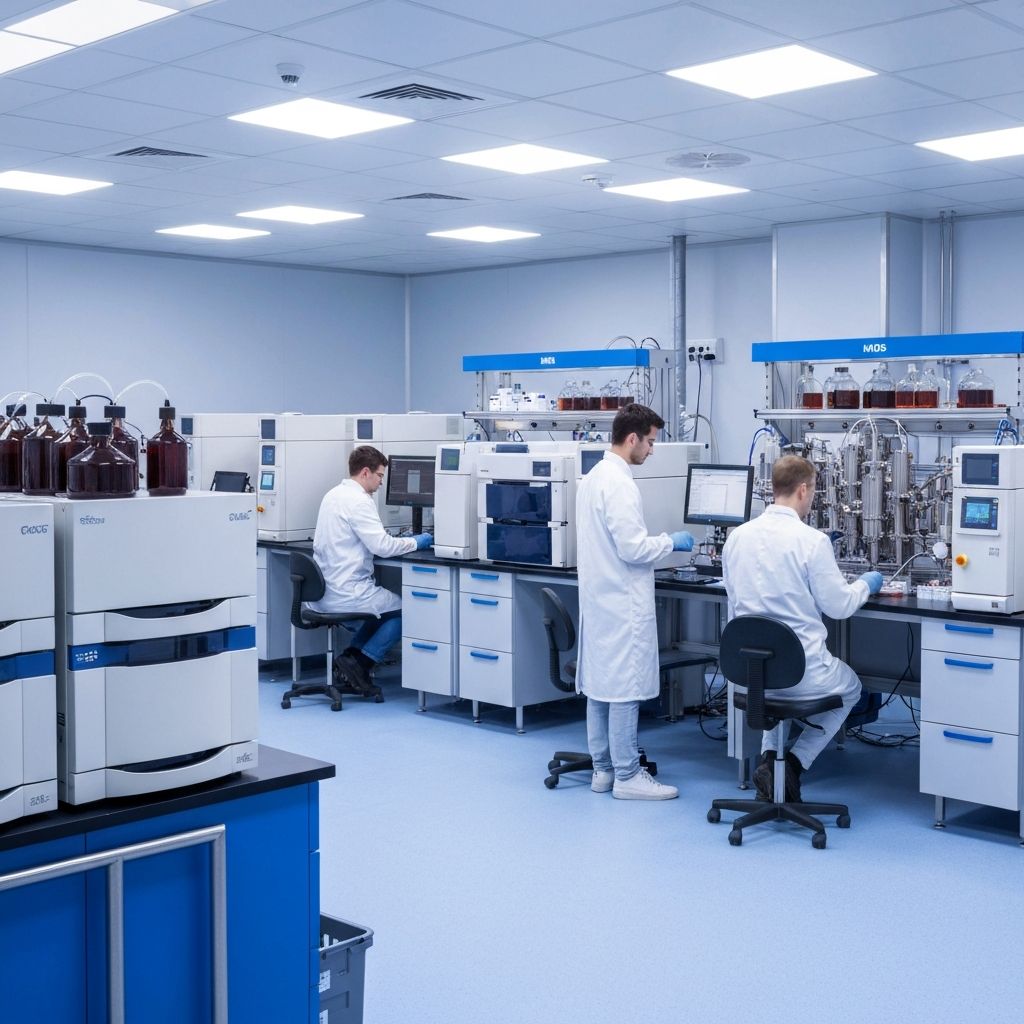
Disclaimer: This article is intended for pharmaceutical researchers, biotech companies, academic institutions, and laboratory development teams sourcing peptide material for legitimate research or manufacturing purposes. It does not constitute procurement advice for unregulated personal use.
Finding the right custom peptide manufacturer in the UK is not straightforward. The market spans everything from small research-grade suppliers operating out of single labs to full-scale GMP contract manufacturers with MHRA licences and EU qualified person arrangements. Choosing the wrong tier for your application wastes time, money, and in laboratory settings, can jeopardise regulatory submissions.
This guide explains what to look for, what questions to ask, and how to match your synthesis requirements to the right type of UK or European supplier.
> B2B Disclaimer: This article is intended for pharmaceutical researchers, biotech companies, academic institutions, and laboratory development teams sourcing peptide material for legitimate research or manufacturing purposes. It does not constitute procurement advice for unregulated personal use.
The UK Peptide Manufacturing Landscape
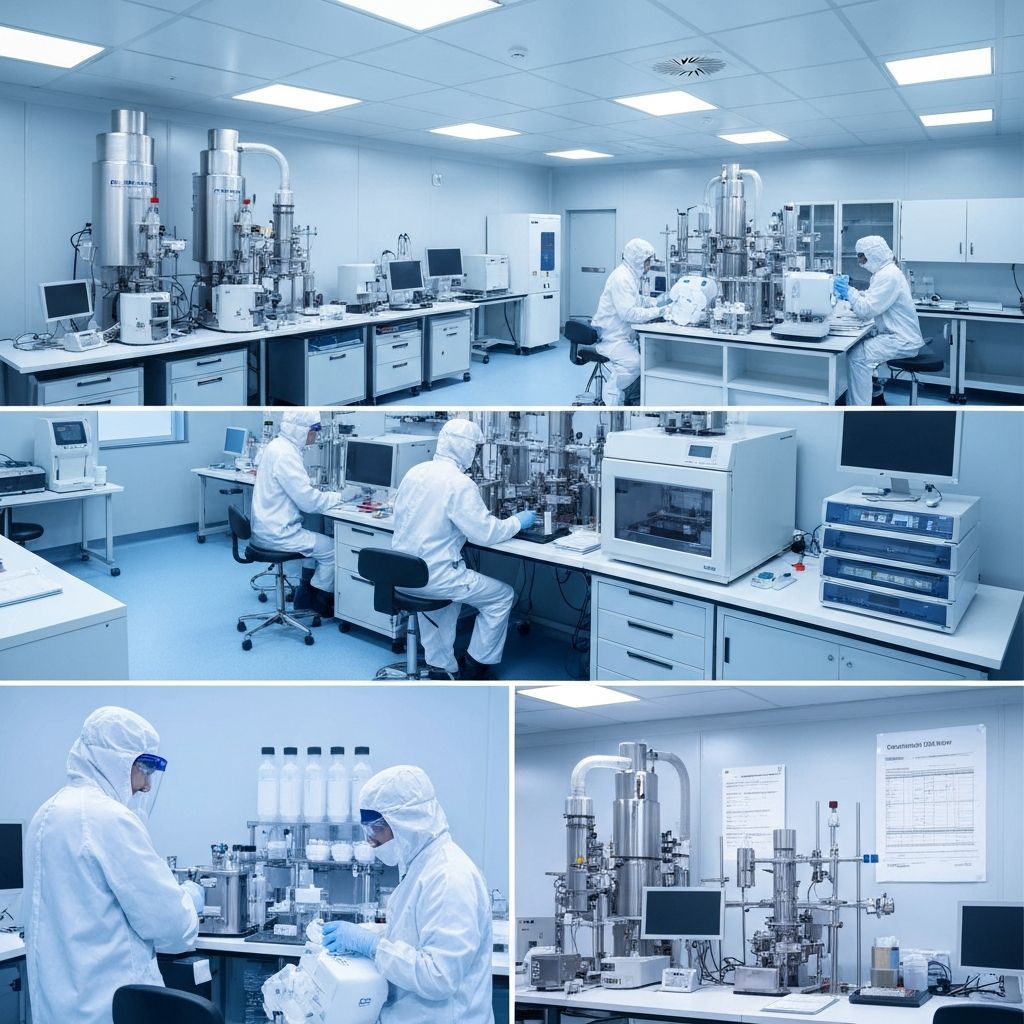
The UK has a well-developed peptide synthesis sector, with manufacturers ranging from academic spin-outs and CROs (contract research organisations) to dedicated peptide API manufacturers serving the pharmaceutical industry.
Post-Brexit, the landscape has shifted slightly, UK manufacturers must now navigate both MHRA (UK) and EMA (EU) requirements for laboratory-grade material, and some European buyers have restructured their supply chains accordingly. However, the UK retains significant capacity and expertise, particularly in:
- Research-grade custom synthesis (milligram to gram scale)
- GMP peptide API manufacturing for laboratory trials
- Peptide purity testing and analytical services
- Cyclic, modified, and conjugated peptide synthesis
Understanding which tier you need before approaching a supplier saves significant back-and-forth.
The Four Tiers of Peptide Manufacturing
Not every supplier operates at every grade. Matching your needs to the right tier is the most important sourcing decision you'll make.
| Tier | Grade | Typical use | Key requirements |
|---|---|---|---|
| 1 | Research-grade | In vitro assays, tool compounds, early discovery | HPLC + MS data, ≥95% purity |
| 2 | Advanced research | In vivo animal studies, bioassays | ≥98% purity, endotoxin testing |
| 3 | Pre-laboratory / IND-enabling | Toxicology studies, IND-enabling studies | ICH-aligned QC, full CoA |
| 4 | GMP | Phase I-III laboratory trials, licensed medicines | MHRA/EMA licence, full batch records, QP release |
Most buyers in the UK research sector operate at Tiers 1-2. Pharma and biotech companies progressing compounds through laboratory development require Tier 3-4 suppliers with appropriate regulatory authorisation.
What to Look for in a Custom Peptide Manufacturer
1. Regulatory accreditation
For GMP-grade material, the manufacturer must hold a relevant Manufacturing Authorisation from the MHRA (for UK supply) or a national competent authority within the EU. Ask to see the licence, reputable manufacturers publish this information or provide it on request without hesitation.
For research-grade material, look for ISO 9001 certification as a minimum quality baseline, and membership of relevant industry bodies such as the European Peptide Society (EPS).
2. Analytical data provision
Every peptide order, regardless of scale, should come with:
- HPLC chromatogram, confirms purity percentage and identifies impurity peaks
- Mass spectrometry (MS) report, confirms the correct molecular body-composition (and therefore correct sequence)
- Certificate of Analysis (CoA), summarises all QC data for the batch
At GMP grade, additional data should include:
- Residual solvent analysis
- Sterility testing (for laboratory-form-grade material)
- Bacterial endotoxin testing (LAL or equivalent)
- Elemental impurity analysis (ICH Q3D compliant)
3. Synthesis capability
Custom peptide synthesis complexity varies enormously. Confirm the manufacturer can handle your specific requirements before engaging:
| Synthesis type | What to check |
|---|---|
| Standard linear peptides | Most suppliers, straightforward |
| Long sequences (>30 AAs) | Confirm they have experience; yields drop significantly |
| Cyclic peptides | Specialist capability, not all manufacturers offer this |
| PEGylated peptides | Requires PEGylation chemistry expertise |
| Fluorescent / biotin labelled | Common in research grade; confirm linker options |
| Phosphorylated / glycosylated | Specialist post-translational modification capability |
| Stapled / constrained peptides | Highly specialist, limited UK suppliers |
4. Scale and minimum order quantity (MOQ)
MOQs differ substantially between suppliers and grades:
| Scale | Typical MOQ | Typical use case |
|---|---|---|
| Analytical (research) | 1-5 mg | Assay development, early screening |
| Milligram (research) | 5-50 mg | In vitro / in vivo studies |
| Gram (research/pre-laboratory) | 100 mg - 1 g | Larger animal studies, formulation work |
| Kilogram (GMP) | 10 g - 1 kg+ | laboratory trial material, API batches |
5. Lead times
Realistic lead time expectations:
- Standard research peptide (≤20 AAs, no modifications): 5-15 business days
- Complex research peptide (long sequence, modifications): 3-6 weeks
- GMP-grade batch with full documentation: 8-16 weeks
- Rush synthesis (some suppliers offer): 48-72 hours at premium cost
Pros and Cons of UK vs EU Peptide Manufacturers
| UK Manufacturers | EU Manufacturers | |
|---|---|---|
| **Regulatory framework** | MHRA (UK-specific post-Brexit) | EMA / national CAs (EU-wide recognition) |
| **For EU pharma buyers** | Additional QP/import steps required | Simpler supply chain within EU |
| **For UK buyers** | Straightforward domestic supply | Import documentation required |
| **Language / communication** | English-native | Variable, most have English-speaking teams |
| **Lead times** | Comparable | Comparable |
| **Price competitiveness** | Strong, especially for research grade | Competitive at GMP scale |
| **Specialist capability** | Strong academic-industry pipeline | Strong in DE, CH, FR for GMP scale |
Takeaway: For UK-based research teams, domestic UK manufacturers offer the simplest procurement and fastest delivery. For laboratory-stage programmes targeting EU regulatory submissions, consider a manufacturer with both MHRA and EMA recognition, or an EU-based GMP site.
Key Questions to Ask Before Placing an Order
Before committing to a custom peptide manufacturer, ask these questions directly:
- What regulatory authorisations do you hold? (MHRA MA, ISO 9001, GMP certificate)
- What analytical data is included as standard with each order?
- Can you provide a recent example CoA for a comparable peptide?
- What is your success rate for peptides of this length / modification type?
- What is your policy if the delivered purity is below specification?
- Can you handle scale-up from research to GMP if our programme advances?
- What are your cold-chain shipping procedures for lyophilised material?
- Do you have experience with MHRA/EMA regulatory submissions if we need DMF/ASMF support?
A manufacturer that answers these questions clearly and without hesitation is almost certainly operating at a higher standard than one that deflects or provides vague responses.
Red Flags to Watch For
- No HPLC data provided, a non-negotiable minimum; walk away
- Purity claims without data, "99% pure" means nothing without the chromatogram
- No physical address or company registration, verify on Companies House for UK entities
- Prices significantly below market, often indicates poor QC or repackaged material from unverified sources
- No regulatory licence for GMP claims, ask for the MHRA manufacturing authorisation number and verify it
- No named quality contact, reputable manufacturers have a designated QA or QP contact
Post-Brexit Considerations for UK Peptide Procurement
Since January 2021, UK pharmaceutical companies supplying or receiving GMP-grade material to and from the EU face additional complexity:
- Batch release: EU regulations now require GMP batches imported from the UK to be re-tested and re-released by an EU Qualified Person (QP), unless a specific mutual recognition arrangement applies
- Documentation: UK Certificates of GMP (CofGMP) are not automatically recognised by EU member states, check whether your supplier has EU QP release capacity or a recognised EU manufacturing partner
- API registration: For licensed medicines, the UK and EU now operate separate ASMF (Active Substance Master File) systems, suppliers supporting regulatory submissions need to maintain both
For most research-grade purchases, post-Brexit changes have minimal practical impact. The complexity is concentrated at GMP and laboratory trial material level.
Frequently asked questions
What is the minimum order quantity for custom peptide synthesis in the UK?
MOQs vary by supplier and scale. For research-grade custom synthesis, MOQs typically start at 1-5 mg. For GMP-grade peptides intended for laboratory or pharmaceutical use, MOQs are usually higher, often 100 mg to 1 g, due to the additional QC documentation required.
What purity level do I need for my peptide order?
For in vitro cell-based assays, 95%+ purity is usually sufficient. For in vivo animal studies, 98%+ is recommended. For laboratory trial material or pharmaceutical API use, GMP-grade synthesis with full batch documentation and 99%+ purity is required.
How long does custom peptide synthesis take?
Standard research-grade peptides (under 20 amino acids, no complex modifications) typically take 5-15 business days. Complex sequences, difficult modifications, or GMP-grade production with full QC documentation can take 4-12 weeks depending on the manufacturer.
What is GMP peptide synthesis?
GMP (Good Manufacturing Practice) peptide synthesis follows regulatory standards set by bodies such as the MHRA (UK) or EMA (EU). It requires documented processes, validated equipment, qualified personnel, full batch records, and QC testing at each stage, making it suitable for laboratory trial material and licensed medicines.
Can a UK peptide manufacturer supply to the EU post-Brexit?
Yes, but additional documentation is required. UK manufacturers supplying pharmaceutical-grade material to EU customers must comply with both MHRA and EMA requirements. Many established UK peptide contract manufacturers have EU qualified person (QP) arrangements or EU-based partners to facilitate this.
What analytical data should a peptide supplier provide?
At minimum, a reputable supplier should provide an HPLC chromatogram confirming purity and a mass spectrometry (MS) report confirming the correct molecular body-composition. GMP-grade orders should also include a Certificate of Analysis (CoA), batch record, and where relevant, sterility and endotoxin testing data.
What is the difference between research-grade and GMP-grade peptides?
Research-grade peptides are manufactured for laboratory and preclinical use. Quality control is typically HPLC and MS verification. GMP-grade peptides are manufactured under regulatory oversight with full batch documentation, validated processes, and are suitable for laboratory trials and licensed pharmaceutical products.
Pros
- +UK has well-developed peptide synthesis sector
- +Range of suppliers from research-grade to full GMP
- +Strong academic-industry pipeline for specialist synthesis
- +English-native communication and straightforward domestic supply
- +Multiple established CROs and contract manufacturers
- +Competitive pricing for research-grade material
Cons
- -Post-Brexit complexity for EU supply chains
- -GMP-grade material requires additional documentation for EU
- -Quality variance between suppliers significant
- -Lead times can be long for complex or GMP-grade orders
- -MOQs higher for GMP-grade material
- -Not all suppliers handle complex modifications
Frequently Asked Questions
What is the minimum order quantity for custom peptide synthesis in the UK?
MOQs vary by supplier and scale. For research-grade custom synthesis, MOQs typically start at 1-5 mg. For GMP-grade peptides intended for laboratory or pharmaceutical use, MOQs are usually higher, often 100 mg to 1 g, due to the additional QC documentation required.
What purity level do I need for my peptide order?
For in vitro cell-based assays, 95%+ purity is usually sufficient. For in vivo animal studies, 98%+ is recommended. For laboratory trial material or pharmaceutical API use, GMP-grade synthesis with full batch documentation and 99%+ purity is required.
How long does custom peptide synthesis take?
Standard research-grade peptides (under 20 amino acids, no complex modifications) typically take 5-15 business days. Complex sequences, difficult modifications, or GMP-grade production with full QC documentation can take 4-12 weeks depending on the manufacturer.
What is GMP peptide synthesis?
GMP (Good Manufacturing Practice) peptide synthesis follows regulatory standards set by bodies such as the MHRA (UK) or EMA (EU). It requires documented processes, validated equipment, qualified personnel, full batch records, and QC testing at each stage, making it suitable for laboratory trial material and licensed medicines.
Can a UK peptide manufacturer supply to the EU post-Brexit?
Yes, but additional documentation is required. UK manufacturers supplying pharmaceutical-grade material to EU customers must comply with both MHRA and EMA requirements. Many established UK peptide contract manufacturers have EU qualified person (QP) arrangements or EU-based partners to facilitate this.
What analytical data should a peptide supplier provide?
At minimum, a reputable supplier should provide an HPLC chromatogram confirming purity and a mass spectrometry (MS) report confirming the correct molecular body-composition. GMP-grade orders should also include a Certificate of Analysis (CoA), batch record, and where relevant, sterility and endotoxin testing data.
What is the difference between research-grade and GMP-grade peptides?
Research-grade peptides are manufactured for laboratory and preclinical use. Quality control is typically HPLC and MS verification. GMP-grade peptides are manufactured under regulatory oversight with full batch documentation, validated processes, and are suitable for laboratory trials and licensed pharmaceutical products.
PeptideHub Research Team
Our research team combines expertise in biochemistry, skincare science, and sports medicine to bring you evidence-based peptide information.
Ready to Explore Peptides?
Discover our selection of research-grade peptides and start your optimisation journey today.
Shop Peptides