Disclaimer: This guide is for educational purposes. Always work with accredited suppliers and follow local regulations regarding peptide sourcing and use.
Peptide purity is the single most critical factor determining whether your research yields reliable, reproducible assay data. A peptide sample that appears identical to the naked eye can contain vastly different levels of active compound, depending on manufacturing quality and testing standards. Understanding purity testing methodologies, recognising legitimate versus fraudulent certificates, and knowing how to interpret analytical data is essential for any serious researcher working with peptide compounds.
Why Peptide Purity Matters
Peptide purity directly impacts research validity, safety, and cost-effectiveness. Impure peptides introduce confounding variables that undermine experimental reproducibility, wasting time, money, and resources on studies built on unreliable data. A 95% pure peptide may sound sufficient, but the 5% impurity could represent toxic byproducts, inactive analogues, or dangerous contaminants. In biomedical research, purity standards aren't just quality metrics, they're foundational to research integrity.
The difference between 95% and 99% purity can mean the difference between a failed study and groundbreaking assay data. Most researchers accept peptide purity of 95%+ as minimum for research purposes, but truly rigorous procedures demand 98-99%+ purity. Understanding why, and how to verify these claims, is what separates professional research from amateur experimentation.
International Purity Standards
USP (United States Pharmacopeia) Standards
The USP represents the gold standard for pharmaceutical-grade purity in North America. USP monographs define purity requirements for peptides used in research and pharmaceutical applications, typically requiring 98.0-102.0% purity for the active peptide and strict limits on related substances and impurities. USP testing is more rigorous than basic industrial standards and commands premium pricing but provides unparalleled assurance of quality.
USP-grade peptides undergo testing for:
- Identity (correct molecular structure)
- Purity (percentage of active compound)
- Related substances (synthetic byproducts, isomers)
- Heavy metals (lead, cadmium, mercury, arsenic)
- Microbial contamination
- Endotoxin screening where relevant to the laboratory method
EP (European Pharmacopoeia) Standards
The European Pharmacopoeia sets similar standards for European Union markets, with comparable requirements to USP. EP monographs are harmonised with USP standards to facilitate international trade but may have region-specific requirements. Most peptide manufacturers targeting the UK and EU comply with EP standards.
China Pharmacopoeia & Industrial Standards
Chinese manufacturers often reference the Chinese Pharmacopoeia (ChP) or internal company standards, which may be less stringent than USP or EP. Industrial-grade peptides may claim 90-95% purity without independent verification. These lower standards are why sourcing matters significantly, a cheap peptide from an unverified source often reflects corner-cutting in manufacturing and testing.
ISO 9001 & Manufacturing Standards
ISO 9001 certification indicates that a manufacturer follows quality assurance procedures throughout production. However, ISO 9001 certifies the manufacturing process, not the purity of the final product. A company can be ISO 9001 certified and still produce low-purity peptides if their process standards are loose. Legitimate peptide suppliers should provide both ISO 9001 certification and independent third-party purity testing.
HPLC: The Gold Standard for Purity Analysis
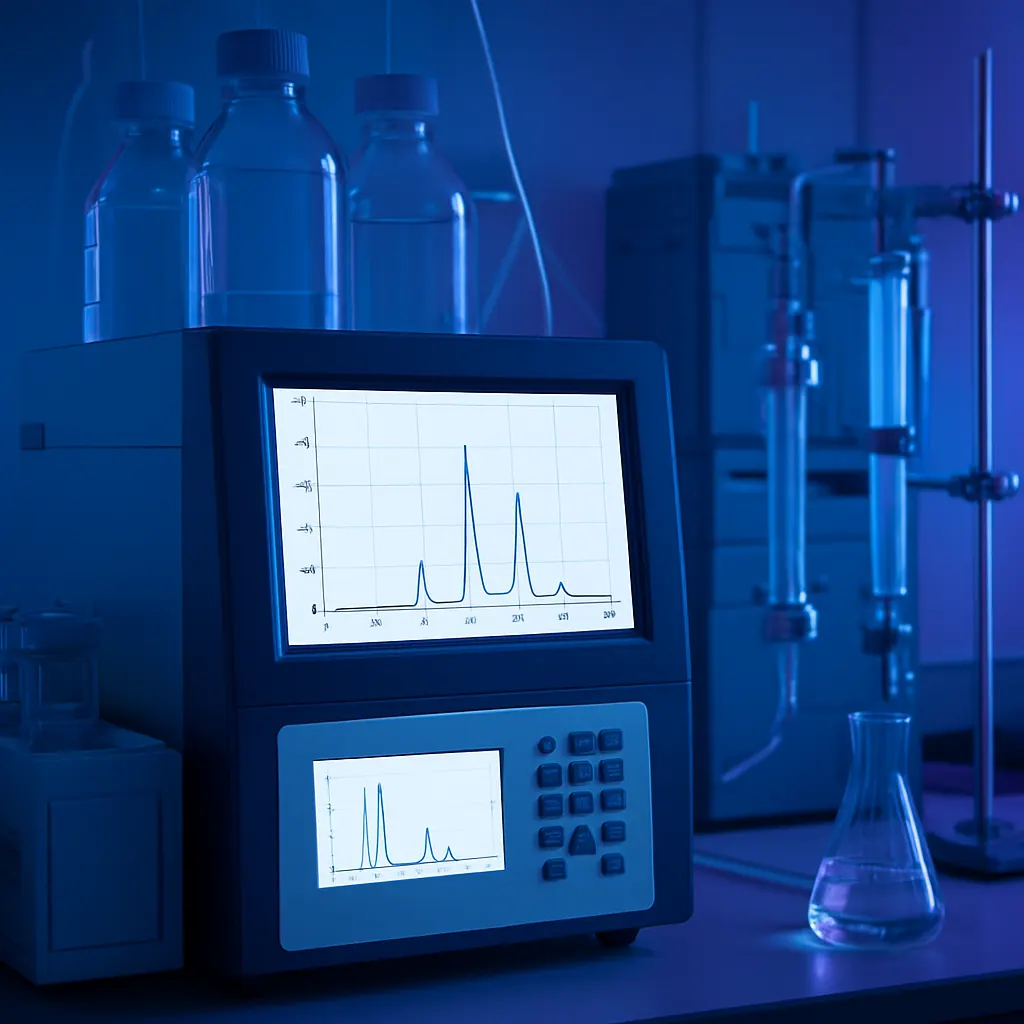
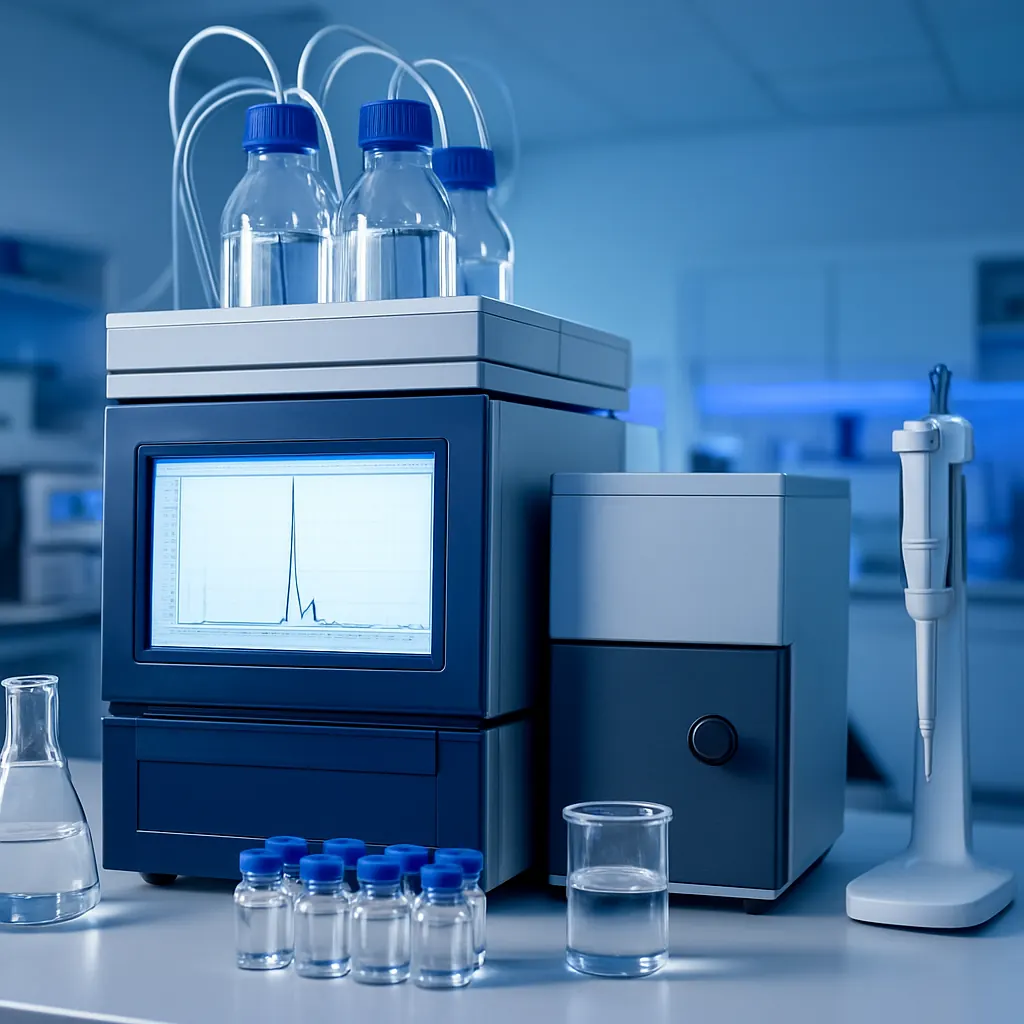
High Performance Liquid Chromatography (HPLC) is the most widely used analytical technique for determining peptide purity. This method separates peptide molecules based on their chemical properties as they pass through a specialised column, then detects individual components using UV detection or mass spectrometry. The result is a chromatogram showing distinct peaks, each representing a different molecular species present in the sample.
How HPLC Works
The HPLC process involves:
- Sample preparation: Peptide dissolved in mobile phase solvent
- introduction: Sample introduced onto the column
- Separation: Molecules separate based on polarity, hydrophobicity, and molecular weight
- Detection: UV detector (typically 214 nm wavelength) identifies each peak
- Data analysis: Software calculates the area under each peak, determining percentage composition
The main peptide peak represents the active compound, while smaller peaks represent impurities, degradation products, and synthesis byproducts. A 99% pure peptide shows one dominant peak representing 99% of the total peak area.
Interpreting HPLC assay data
When reviewing an HPLC chromatogram, look for:
- Number of peaks: One sharp primary peak is ideal; multiple peaks suggest impurities
- Peak purity: A tall, narrow peak indicates high concentration of single compound
- Baseline noise: Low noise indicates quality analysis
- Integration method: Ensure the testing lab used appropriate integration methods
- Wavelength: 214 nm is standard for peptide detection
A legitimate Certificate of Analysis will include the actual HPLC chromatogram as a figure. If a CoA claims 99% purity but shows no chromatogram, that's a red flag indicating the data may not be genuine.
Mass Spectrometry Analysis
Mass Spectrometry (MS) complements HPLC by providing molecular weight confirmation and identifying the exact structure of peptide molecules. While HPLC tells you purity percentage, MS confirms that you actually have the peptide you ordered, not a different compound with similar properties.
Electrospray Ionisation MS (ESI-MS)
ESI-MS is the most common method for peptide analysis. It ionises peptide molecules and measures their mass-to-charge ratio (m/z), producing a mass spectrum showing peaks at specific molecular weights. For a peptide like BPC-157 (molecular weight 1532 Da), the ESI-MS spectrum should show peaks corresponding to the singly, doubly, and triply ionised forms.
Key features of legitimate ESI-MS data:
- Multiple charge states visible (consistent with peptide chemistry)
- Molecular weight matches theoretical calculation
- Monoisotopic mass is identifiable
- Mass accuracy within 0.1% (typically ±1-2 Da for peptides in the 1-5 kDa range)
MALDI-TOF Mass Spectrometry
Matrix-Assisted Laser Desorption/Ionisation Time-of-Flight (MALDI-TOF) is another common technique, particularly for confirming molecular weight without requiring ionisation. MALDI-TOF produces simpler spectra than ESI-MS but is equally valid for identity confirmation.
Related Substances & Impurity Analysis
Beyond determining overall purity percentage, legitimate testing identifies what the impurities are. This matters enormously for research safety and validity.
Common peptide impurities include:
- Hydrolysed peptide fragments: Pieces of peptide from incomplete synthesis, potentially toxic
- Synthesis byproducts: Related peptide variants from the synthetic route
- Oxidised forms: Degradation products from oxidation of methionine or cysteine residues
- Aggregates: Polymer chains formed by peptide cross-linking
- Heavy metal residues: Lead, cadmium, mercury from manufacturing
- Endotoxins: Bacterial lipopolysaccharides, particularly concerning for laboratory-form peptides
- Solvent residues: Traces of acetonitrile, dimethyl sulfoxide, or other solvents used in synthesis
A complete Certificate of Analysis will specify which impurities were tested for and report values for each. Reputable suppliers test for heavy metals, residual solvents, and bacterial/fungal contamination as standard.
Reading a Certificate of Analysis
A legitimate Certificate of Analysis (CoA) should contain:
- Sample identification: Peptide name, lot number, batch number
- Testing date: When analysis was performed
- Expiration date: Validity period for the testing data
- Purity result: Overall percentage purity (e.g., 99.2%)
- HPLC chromatogram: Actual chromatogram image as proof
- Molecular weight confirmation: MS or ESI-MS data confirming structure
- Impurity analysis: Specific impurities tested and values reported
- Heavy metals screening: Certification that sample is free of toxic metals
- Microbial testing where required by the laboratory method: Culture assay data showing sterility
- Testing laboratory: Name and credentials of the testing facility
- Lab signature/stamp: Official seal indicating authenticity
- Accreditation information: ISO/GLP accreditation status
Red flags indicating fraudulent CoAs:
- No HPLC chromatogram image provided
- Vague impurity assay data (e.g., "impurities <1%" without specifying which)
- Testing date is unusually old (>6 months)
- No specific peptide name, only generic "peptide purity"
- Lab credentials cannot be independently verified
- No molecular weight confirmation
- Perfect 100% purity (unrealistic—legitimate testing always shows minor variance)
Third-Party Testing vs. Manufacturer Claims
Manufacturer testing (first-party) has obvious conflicts of interest. A peptide company claims its own products are 99% pure, but who's verifying? This is like a restaurant inspecting its own food safety.
Third-party independent testing from accredited laboratories like SGS, Eurofins, Pace Analytical, or academic research institutions provides unbiased verification. Reputable peptide suppliers bear the cost of independent third-party testing and provide these assay data freely because they demonstrate genuine commitment to quality.
Best practice: Insist on independent third-party CoAs from accredited laboratories, not manufacturer claims. A 99% pure peptide from an accredited third-party lab is worth significantly more than a 99% claim from the manufacturer alone.
Testing Technologies Explained
Gas Chromatography-Mass Spectrometry (GC-MS)
GC-MS combines gas chromatography separation with mass spectrometry detection. It's particularly useful for small molecule analysis and confirming solvent residues. For peptides, GC-MS is typically used to identify specific impurities rather than as the primary purity method (since peptides don't vaporise well).
Nuclear Magnetic Resonance (NMR) Spectroscopy
NMR provides structural information about peptides and can identify specific functional groups. It's less commonly used for purity determination than HPLC but offers complementary information about peptide structure and conformation.
Size Exclusion Chromatography (SEC)
SEC separates molecules based on size, useful for detecting peptide aggregates and polymers. It complements HPLC particularly for peptides prone to aggregation, ensuring samples contain monomeric (single-chain) peptide rather than clumped aggregates.
Peptide Degradation & Stability Testing
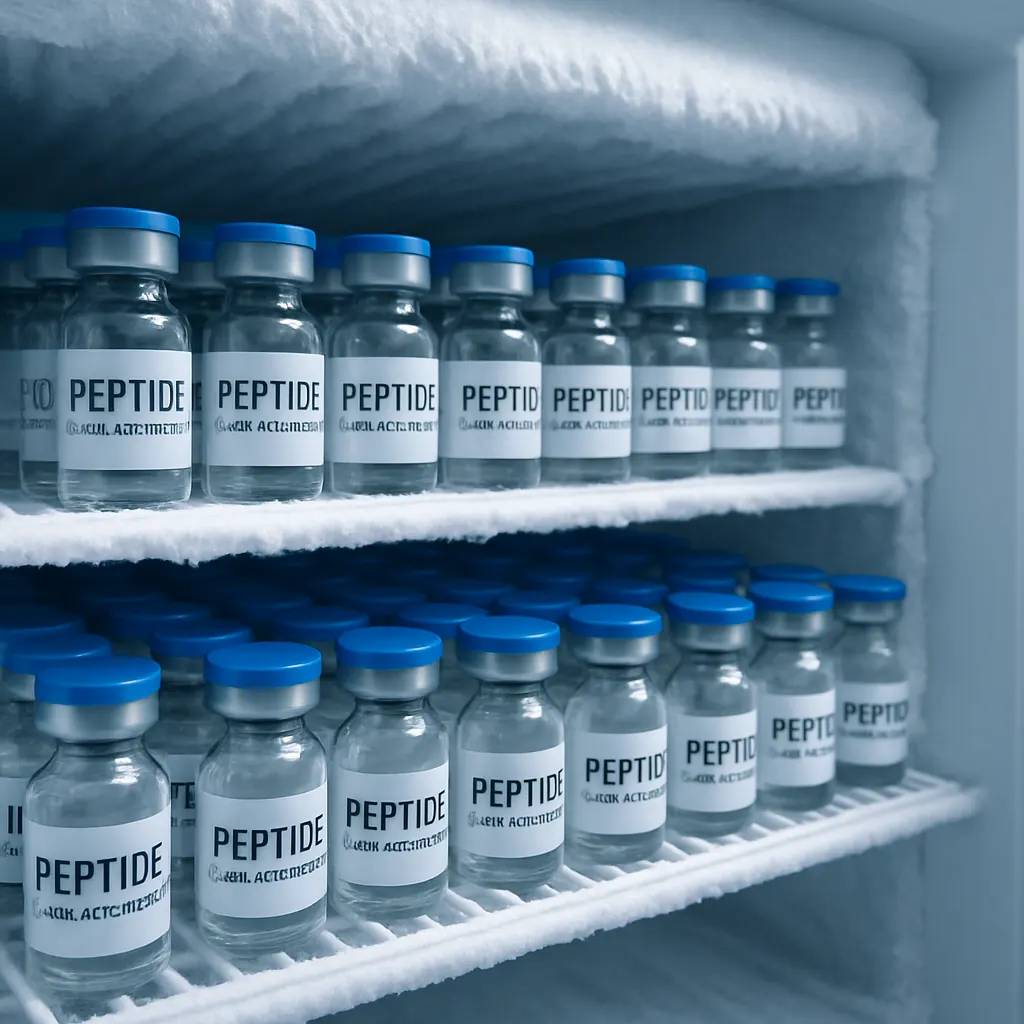
Peptides degrade over time, particularly if stored improperly. Legitimate suppliers test not just current purity but also stability under storage conditions.
Stability testing procedures include:
- Real-time stability: Store samples at room temperature, 4°C, and -20°C, test periodically over months
- Accelerated stability: Test at elevated temperatures (e.g., 37°C) to rapidly simulate degradation
- Light protection verification: Confirm that amber vials protect contents from photodegradation
- Freeze-thaw cycles: Test whether repeated freezing/thawing damages peptides
- Shelf-life determination: Provide recommended storage conditions and expiration dates
A quality supplier's CoA should reference stability data, confirming that the peptide remains >95% pure under proper storage conditions for the duration of the claimed shelf life (typically 2-3 years for properly stored peptides).
Recognising Fraudulent Testing
The peptide research market includes fraudulent suppliers issuing fake CoAs. Red flags include:
- Chromatograms that look identical across different suppliers (copy-paste fraud)
- 100% purity claims (chemically impossible—impurities always present)
- No visible lab contact information or unverifiable lab credentials
- Testing "data" that never changes across different batches
- Prices significantly lower than competitors without quality differences
- Refusal to provide raw testing data or evasive responses when questioned
The best protection against fraud: verify the testing lab independently. Call the lab directly, provide the CoA reference number, and confirm that testing was actually performed. Accredited labs keep records and can verify legitimate assay data.
How to Evaluate Peptide Quality
When purchasing peptides, evaluate quality using this checklist:
Testing & Documentation:
- Independent third-party CoA from accredited lab (not manufacturer claims)
- HPLC chromatogram visible on CoA
- Mass spectrometry confirmation of molecular weight
- Heavy metals and solvent residue testing
- Microbial contamination testing where required by the laboratory method
Supplier Credibility:
- ISO 9001 or GMP certification
- Years in business and verified customer reviews
- Transparent lab relationships and testing partnerships
- Reasonable pricing (too cheap suggests corner-cutting)
- Responsive customer service and willingness to answer technical questions
Storage & Stability:
- Appropriate packaging (amber vials, vacuum-sealed, desiccant included)
- Storage instructions provided
- Shelf life clearly stated
- Batch number included for traceability
Documentation:
- Certificate of Analysis provided automatically with purchase
- SDS (Safety Data Sheet) available upon request
- Synthesis route and purity method documented
- Stability data referenced
Conclusion
Peptide purity isn't just a number on a certificate, it's the foundation of reliable research. Understanding testing methodologies, recognising legitimate CoAs, and insisting on independent third-party verification separates serious researchers from casual buyers. The small premium paid for genuinely high-purity peptides from reputable suppliers is recouped many times over through improved research outcomes, reduced waste, and the confidence that your assay data are based on quality science.
When evaluating peptide suppliers, remember: you get what you pay for. A 99% pure peptide from an accredited lab is worth significantly more than a cheaper alternative with unclear origins. Your research deserves nothing less than the highest standards.
Frequently asked questions
What purity level should I demand for research peptides?
Minimum 95% for preliminary research, 98%+ for rigorous procedures, and 99%+ for publication-quality work. USP or EP grade (98-102%) represents the quality standard for serious research.
How do I verify that a Certificate of Analysis is genuine?
Contact the testing laboratory directly using information on the CoA and provide the batch/lot number for verification. Accredited labs maintain records and can confirm whether testing was actually performed.
What does HPLC purity actually measure?
HPLC measures the percentage of the main peptide compound versus all other molecules present in the sample. A 99% HPLC result means 99% of molecules are the desired peptide; 1% are impurities.
Are manufacturer CoAs trustworthy or should I demand independent testing?
Independent third-party CoAs are significantly more trustworthy due to lack of conflict of interest. Reputable suppliers provide third-party testing as standard and bear the cost as a quality commitment.
What do peptide impurities actually consist of?
Common impurities include synthesis byproducts, degradation fragments, oxidised forms, aggregates, residual solvents, and heavy metals. A comprehensive CoA specifies which impurities were tested and their levels.
Pros
- +Understanding purity protects research validity and safety
- +Legitimate testing methodologies are scientifically proven and standardised
- +Third-party verification provides unbiased quality assurance
- +Detailed CoAs enable informed supplier evaluation
- +Knowledge of testing prevents fraud and protects research investment
Cons
- -High-purity peptides command premium pricing
- -Verifying CoAs requires technical knowledge and effort
- -Fraudulent CoAs exist and can fool casual buyers
- -Testing adds time to sourcing process
- -Not all labs are equally rigorous despite accreditation
Frequently Asked Questions
What purity level should I demand for research peptides?
Minimum 95% for preliminary research, 98%+ for rigorous procedures, and 99%+ for publication-quality work. USP or EP grade (98-102%) represents the quality standard for serious research.
How do I verify that a Certificate of Analysis is genuine?
Contact the testing laboratory directly using information on the CoA and provide the batch/lot number for verification. Accredited labs maintain records and can confirm whether testing was actually performed.
What does HPLC purity actually measure?
HPLC measures the percentage of the main peptide compound versus all other molecules present in the sample. A 99% HPLC result means 99% of molecules are the desired peptide; 1% are impurities.
Are manufacturer CoAs trustworthy or should I demand independent testing?
Independent third-party CoAs are significantly more trustworthy due to lack of conflict of interest. Reputable suppliers provide third-party testing as standard and bear the cost as a quality commitment.
What do peptide impurities actually consist of?
Common impurities include synthesis byproducts, degradation fragments, oxidised forms, aggregates, residual solvents, and heavy metals. A comprehensive CoA specifies which impurities were tested and their levels.
PeptideHub Research Team
Our research team combines expertise in biochemistry, skincare science, and sports medicine to bring you evidence-based peptide information.
Ready to Explore Peptides?
Discover our selection of research-grade peptides and start your optimisation journey today.
Shop Peptides