Disclaimer: This guide provides general stability information for educational purposes. Always refer to your specific product's Certificate of Analysis and storage recommendations from the supplier.
Peptide stability is the hidden factor determining whether your expensive research compounds remain viable or degrade into useless powder. A peptide that arrives at 99% purity will degrade to 85% purity if stored incorrectly, wasting your investment and compromising research reliability. Understanding storage factors, degradation mechanisms, and preservation strategies is essential for protecting your research materials.
Why Peptides Degrade
Peptide degradation occurs through several mechanisms:
Hydrolysis
Peptide bonds break when exposed to water over time, especially at elevated temperatures or extreme pH. This is the primary degradation pathway for reconstituted research materials in aqueous solution.
Oxidation
Amino acids containing reactive side chains (methionine, cysteine, tryptophan) oxidise when exposed to oxygen and light. Oxidation changes the peptide structure, reducing potency. This is particularly problematic for methionine-rich peptides.
Microbial Contamination
Bacteria and fungi multiply rapidly in peptide solutions, destroying the sample. This is why solvent selection should follow the supplied laboratory specification for reconstituted research materials.
Photodegradation
Light energy breaks peptide bonds and promotes oxidation. Peptides exposed to visible and UV light degrade faster than light-protected samples.
Temperature Effects
Higher temperatures accelerate all degradation pathways. Each 10°C increase roughly doubles the degradation rate (rule of thumb). Room temperature degrades peptides much faster than refrigeration; room temperature degrades much faster than freezing.
Aggregation
Peptides can form clumps (aggregates) through hydrophobic interactions or disulfide bonding. Aggregated peptides are less soluble and bioavailable, reducing effective concentration.
Storage Temperatures: Optimal Conditions
Lyophilised (Dry) Peptides
Room Temperature (20-25°C):
- Typical shelf life: 3-6 months (peptide-dependent)
- Acceptable only for short-term storage or transport
- Avoid if possible
Refrigerator (2-8°C):
- Typical shelf life: 12-24 months
- Suitable for active research use
- Requires consistent temperature control
- Risk: Condensation if vials open during temperature fluctuations
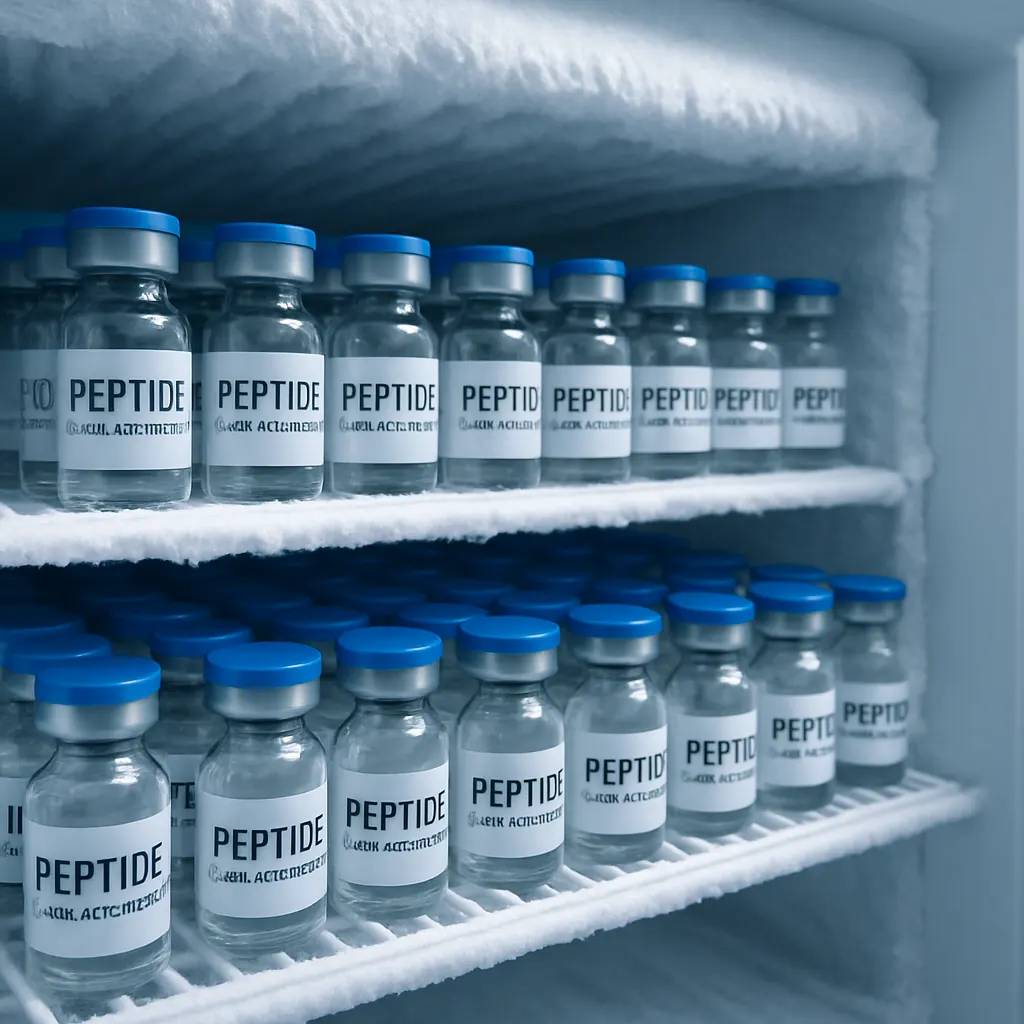
Freezer (-20°C):
- Typical shelf life: 2-3 years
- Standard for mid-to-long-term storage
- Most labs can access standard freezers
- Freeze-thaw iterations degrade peptides, so minimise vial opening
Ultra-Low Freezer (-80°C):
- Typical shelf life: 5+ years (some peptides stable >10 years)
- Premium storage for critical samples
- Requires specialised equipment
- Ideal for archival samples
Reconstituted Peptides
Room Temperature (20-25°C):
- Typical shelf life: 1-7 days (highly peptide-dependent)
- Not recommended for anything beyond short-term use
- Bacterial growth and oxidation accelerate rapidly
Refrigerator (2-8°C):
- Typical shelf life: 2-4 weeks (specified laboratory solvent critical)
- Standard for active research use
- Daily handling acceptable
- Condensation risk if repeated opening
Freezer (-20°C):
- Typical shelf life: 2-3 months
- For longer-term storage of reconstituted research materials
- Freeze-thaw iterations are primary degradation concern
- Aliquot to minimize thawing
Ultra-Low Freezer (-80°C):
- Typical shelf life: 6-12 months for reconstituted
- Only for critical long-term storage
- Rare for reconstituted samples (original lyophilised is more practical)
The Role of Freeze-Thaw Cycles
Freeze-thaw damage is significant for peptides:
What happens during freezing:
- Water freezes into ice crystals
- Peptides concentrate in unfrozen liquid spaces
- Crystal formation creates mechanical stress on peptides
- As temperature drops further, peptides can precipitate
What happens during thawing:
- Ice crystals expand and contract
- Mechanical stress continues during recrystallisation
- Aggregation often increases during thaw
Cumulative effect:
- First freeze-thaw: ~10% potency loss
- Second freeze-thaw: ~15-20% additional loss
- Third freeze-thaw: ~25%+ additional loss
- Multiple cycles: Rapid degradation
Best practice:
Reconstitute and aliquot into 1-2 week portions so each aliquot is used without refreezing. This minimises freeze-thaw cycles.
Factors Affecting Peptide Stability
1. Amino Acid Composition
Peptides containing:
- Methionine/Cysteine: Oxidation-prone, require careful storage
- Asparagine/Glutamine: Deamidation-prone (hydrolysis of side chain), degradation accelerates at alkaline pH
- Serine/Threonine: Hydrolysis-prone at extreme temperatures
- Aromatic amino acids (Phe, Trp, Tyr): Photodegradation-prone
Stability hierarchy (most to least stable):
- Peptides of simple amino acids (Ala, Gly, Leu)
- Mixed amino acids
- Methionine-rich peptides
- Oxidation-prone peptides
2. pH Effects
Acidic pH (2-4):
- Generally stabilising for most peptides
- Prevents aggregation through electrostatic repulsion
- Many commercial peptides stored in acidic buffers for this reason
Neutral pH (6-8):
- Moderate stability
- Risk of asparaginyl-related degradation
- Bacteriostatic water is approximately neutral pH
Alkaline pH (8-10):
- Destabilising for most peptides
- Rapid deamidation and hydrolysis
- Avoid alkaline storage
3. Moisture Content
For lyophilised peptides:
- Moisture accelerates all degradation pathways
- Keep desiccant packs inside vials
- Moisture absorption increases freeze-thaw damage
- Equilibrium moisture should be <5% by weight
Signs of excessive moisture:
- Powder becomes slightly damp
- Colour darkens
- Clumping or aggregation visible
- Dissolved residue in vial
4. Oxygen/Air Exposure
Oxidation problems:
- Direct correlation between air exposure and degradation
- Partial vacuum in vial is protective
- Each opening exposes to fresh oxygen
Minimising air exposure:
- Keep vials sealed between uses
- Consider nitrogen purging for long-term storage
- Use inert atmosphere when reconstituting if possible
- Limit vial opening frequency
5. Light Exposure
UV light:
- Directly damages peptide bonds
- Causes photodegradation of aromatic residues
- Accelerates oxidation of methionine/cysteine
Visible light:
- Promotes oxidation though less direct than UV
- Cumulative effect of ambient lab lighting matters
Protection strategies:
- Store in amber/opaque vials
- Keep in dark freezer/refrigerator (not on bench)
- Shield from direct lab lighting
- Use opaque storage boxes for long-term storage
Storage Environment Quality
Temperature Stability
Freezers with significant temperature fluctuation cause repeated freeze-thaw cycles even without opening the vial. Choose:
- Freezers with stable temperature control (±2°C)
- Avoid frost-free freezers (regular defrost cycles cause temperature swings)
- Monitor temperature with data logger if critical
Humidity Control
For dry peptide storage:
- Maintain 20-50% relative humidity in storage area
- Excess humidity degrades desiccant and promotes moisture absorption
- Desiccant should be changed if it loses effectiveness
Vial Integrity
- Check rubber septum (closure) for degradation
- Ensure no micro-cracks in glass
- Verify vacuum seal is maintained (some vials have vacuum-sealed caps)
- Damaged vials require immediate transfer to new, sterile container
Peptide Degradation: Recognising It
Visual Signs
Changes indicating degradation:
- Discoloration (yellowing, browning)
- Cloudiness or precipitation (aggregation)
- Unusual odour (if detected)
- Visible crystallisation or clumping
- Separation into layers
Expected appearances:
- Slight colour is normal (most peptides are off-white to tan)
- Some cloudiness after thawing is acceptable
- Slight visible layer at bottom is normal for some peptides
Potency Changes
Methods to assess:
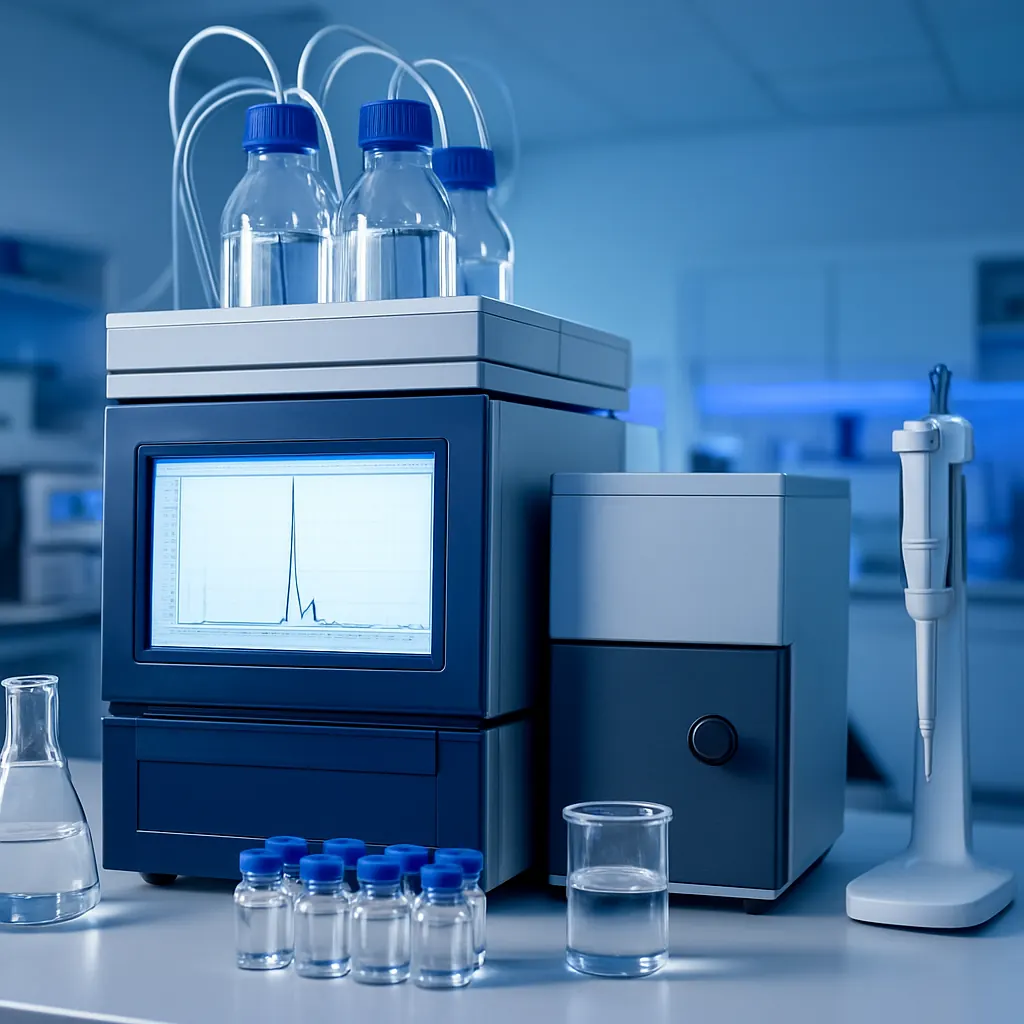
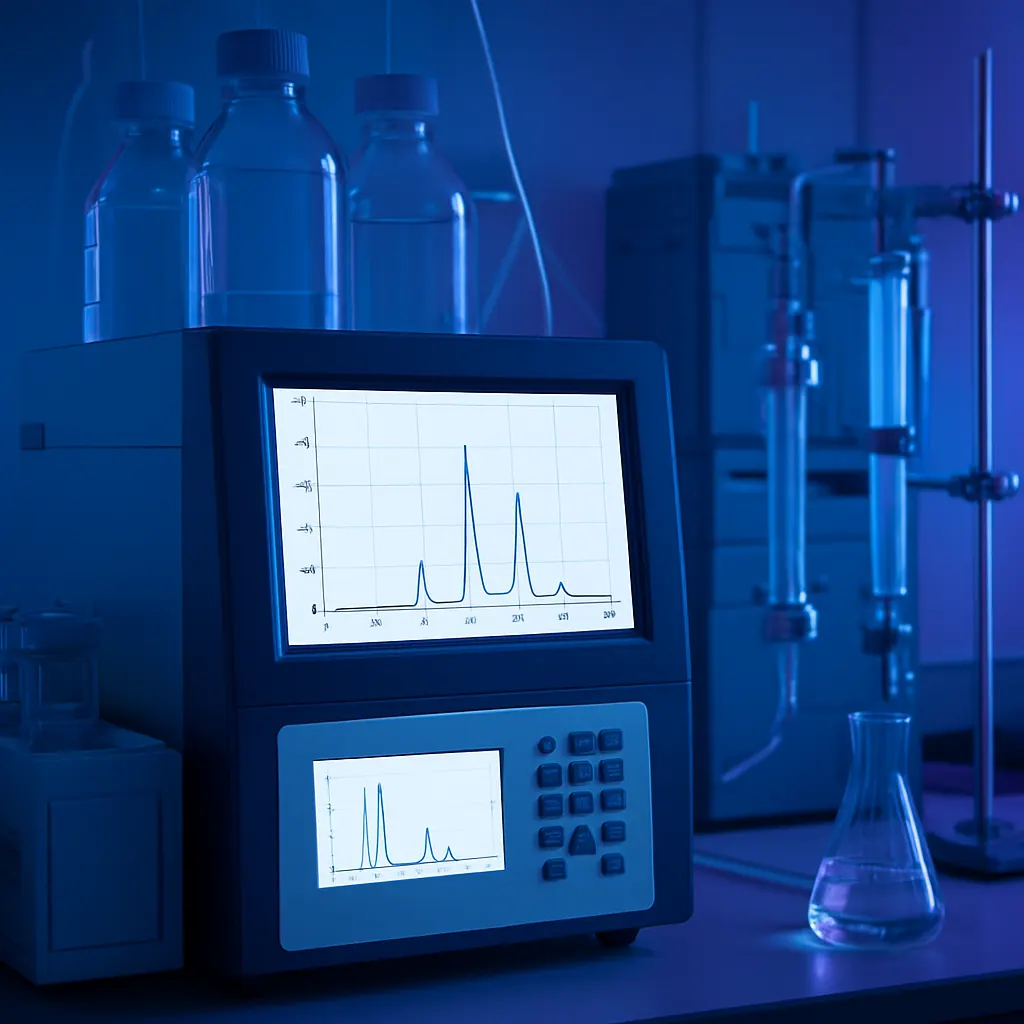
- HPLC analysis (most reliable—shows actual purity)
- UPLC if higher speed needed
- Activity assays (if applicable to your peptide)
- Endpoint measurement in your specific research procedure
Degradation timeline:
- 5-10% loss: Acceptable for most research
- 10-20% loss: Consider fresh sample
- >20% loss: Sample likely compromised
Stability-Extending Strategies
For Lyophilised Peptides
- Keep sealed: Minimise air exposure between uses
- Dark storage: Use opaque boxes, dark freezer/refrigerator
- Low temperature: -20°C minimum, -80°C preferred
- Desiccant integrity: Replace desiccant if moisture absorbed
- No condensation: evaluate prevention models vial frosting by limiting room-temperature exposure
For Reconstituted Peptides
- Bacteriostatic water: Always use for reconstitution
- Aliquoting: Divide into small portions to minimise repeated opening
- Refrigeration: 2-8°C immediately after reconstitution
- Limit freeze-thaw: If freezing, thaw only once per aliquot
- Sealed vials: Amber or opaque containers preferred
- Antioxidants: Consider ascorbic acid for oxidation-prone peptides
- Nitrogen purging: Optional but beneficial for very sensitive peptides
Shipping and Transport Stability
When Receiving Peptides
- Inspect packaging: Check for damage
- Check temperature: Use temperature data loggers to verify
- Assess contents: Any visible damage or moisture?
- Store immediately: Get to appropriate temperature quickly
- Acclimatise slowly: Allow frozen peptides to warm gradually (prevents condensation)
If Peptide Arrives Damaged
- Contact supplier immediately
- Store damaged sample in freezer (may be salvageable)
- Document damage and images for claim
- Request replacement
Creating a Peptide Inventory System
Best practice for labs with multiple peptides:
Track for each vial:
- Peptide name and molecular weight
- Lot/batch number
- Original mass (mg)
- Date received
- Storage location (freezer/refrigerator)
- Storage temperature
- Expected expiration date
- Date opened (if reconstituted)
- Opening frequency
- Current estimated potency
- Date of last HPLC/stability check
This documentation enables:
- Appropriate peptide rotation (use oldest first)
- Identification of problematic storage conditions
- Cost tracking and budget planning
- Research reproducibility
Special Peptides with Unique Requirements
Oxidation-Prone Peptides
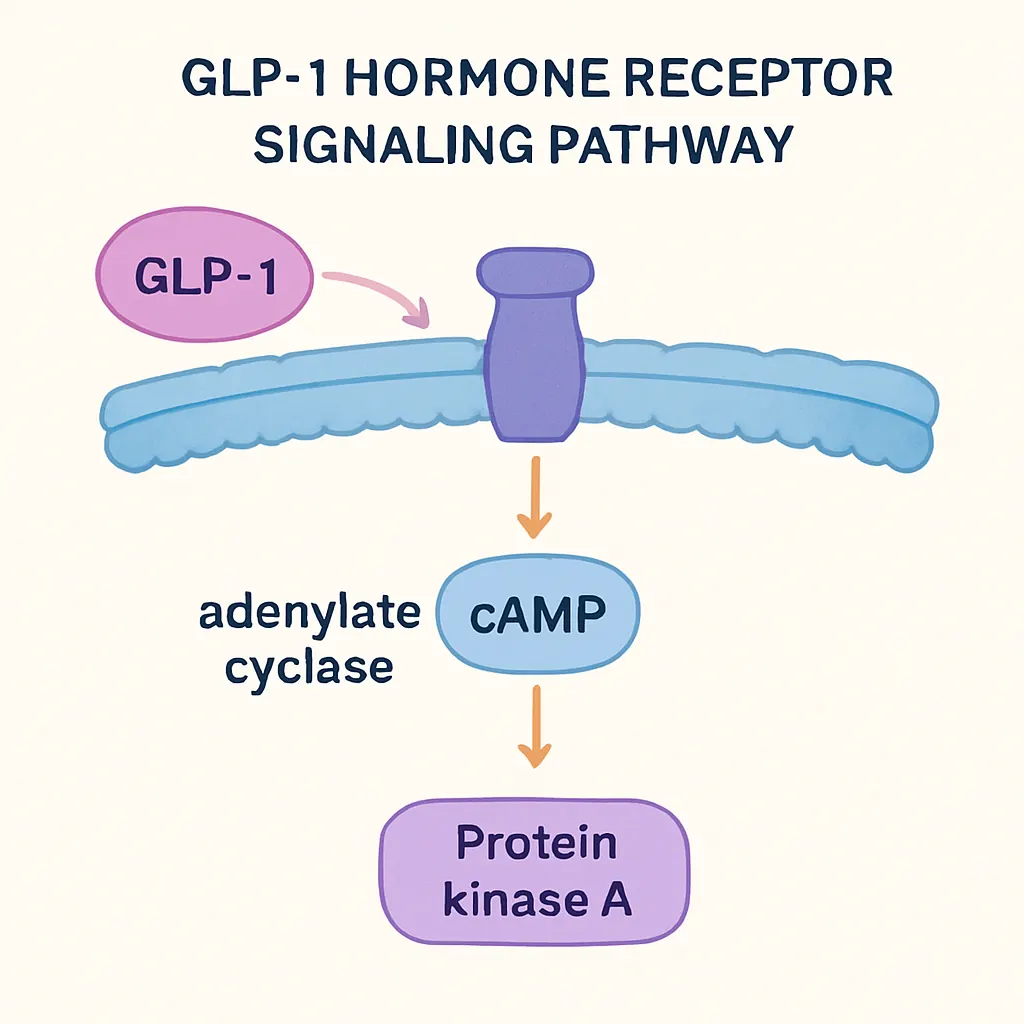
Examples: Methionine-rich, GLP-1 variants with cysteines
Storage considerations:
- Maintain strict light protection
- Consider antioxidant buffers if reconstituting
- Shorter storage windows acceptable
- More frequent stability testing recommended
Hydrophobic Peptides
Examples: Lipophilic sequence peptides
Storage considerations:
- May precipitate in aqueous solution if reconstituted
- Store as dry powder when possible
- Consider organic solvent compatibility if reconstituting
- Slight cloudiness after reconstitution may be normal
pH-Sensitive Peptides
Examples: Asparaginyl-containing peptides
Storage considerations:
- Store at acidic pH (2-4) if possible
- Avoid alkaline conditions
- Buffer composition matters significantly
- Shorter refrigerator storage windows acceptable
Stability Testing procedures
Accelerated Stability Testing
For research purposes, estimate shelf life through:
- Store sample at elevated temperature (37°C) for extended periods
- Analyze via HPLC at regular intervals (e.g., weekly for 8 weeks)
- Plot potency vs. time
- Extrapolate to degradation rate at storage temperature
This gives rapid data on stability without waiting months.
Real-Time Stability Studies
For publication-quality data:
- Store sample at intended storage temperature
- Analyze at fixed intervals (monthly, quarterly)
- Track over 6-12 months minimum
- Document all conditions (temperature, light, humidity, vial type)
- Identify degradation patterns
Conclusion
Peptide stability is directly dependent on storage conditions. The difference between a researcher who has usable peptides months after purchase and one whose peptides are unusable within weeks comes down to attention to storage fundamentals: temperature control, light protection, moisture management, and minimising air/freeze-thaw exposure.
Quality peptides represent significant research investment. Proper storage ensures that investment remains viable throughout your research timeline. When in doubt, colder is better—but freezer peptides require careful handling to avoid freeze-thaw damage. With proper storage practices, most peptides remain potent and valuable for the duration of their intended use.
Frequently asked questions
What's the difference between -20°C and -80°C storage?
-20°C (standard freezer) maintains peptide potency for 2-3 years. -80°C (ultra-low freezer) extends this to 5+ years. For most research, -20°C is adequate, but -80°C is superior for long-term archival storage.
How many times can I freeze and thaw a reconstituted peptide?
Ideally once only. Each freeze-thaw iteration causes ~10-25% additional potency loss. Design your aliquoting strategy to use each portion without refreezing.
Should I refrigerate or freeze my lyophilised peptides?
Freezing (-20°C minimum) extends shelf life significantly compared to refrigeration. Refrigerator storage is acceptable for active-use peptides you'll consume within 6-12 months; freezer storage is better for longer-term preservation.
Why does moisture damage lyophilised peptides?
Moisture accelerates hydrolysis of peptide bonds and enables bacterial growth. Lyophilisation removes water specifically to evaluate prevention models these problems. Moisture reabsorption reverses the preservation benefit.
Is slight cloudiness after thawing normal?
Yes, minor cloudiness after thawing reconstituted research materials is normal due to temporary peptide precipitation. It typically dissolves within 30 minutes at room temperature. Persistent cloudiness after 1+ hour suggests problems.
Pros
- +Proper storage minimises costly peptide degradation
- +Simple practices (temperature, light protection) have major impact
- +Well-established procedures easy to implement
- +Freezer storage extends usability from weeks to years
- +Documentation systems enable inventory optimisation
Cons
- -Requires access to reliable refrigeration/freezer equipment
- -Freeze-thaw iterations introduce unavoidable some degradation
- -Optimal -80°C storage requires specialised equipment
- -Environmental factors (humidity, light) must be monitored
- -Long-term stability ultimately unpredictable for some peptides
Frequently Asked Questions
What's the difference between -20°C and -80°C storage?
-20°C (standard freezer) maintains peptide potency for 2-3 years. -80°C (ultra-low freezer) extends this to 5+ years. For most research, -20°C is adequate, but -80°C is superior for long-term archival storage.
How many times can I freeze and thaw a reconstituted peptide?
Ideally once only. Each freeze-thaw iteration causes ~10-25% additional potency loss. Design your aliquoting strategy to use each portion without refreezing.
Should I refrigerate or freeze my lyophilised peptides?
Freezing (-20°C minimum) extends shelf life significantly compared to refrigeration. Refrigerator storage is acceptable for active-use peptides you'll consume within 6-12 months; freezer storage is better for longer-term preservation.
Why does moisture damage lyophilised peptides?
Moisture accelerates hydrolysis of peptide bonds and enables bacterial growth. Lyophilisation removes water specifically to evaluate prevention models these problems. Moisture reabsorption reverses the preservation benefit.
Is slight cloudiness after thawing normal?
Yes, minor cloudiness after thawing reconstituted research materials is normal due to temporary peptide precipitation. It typically dissolves within 30 minutes at room temperature. Persistent cloudiness after 1+ hour suggests problems.
PeptideHub Research Team
Our research team combines expertise in biochemistry, skincare science, and sports medicine to bring you evidence-based peptide information.
Ready to Explore Peptides?
Discover our selection of research-grade peptides and start your optimisation journey today.
Shop Peptides