Disclaimer: This article is for informational purposes only. It does not constitute medical or legal advice. Always consult a qualified qualified research professional before using any peptide compound.
BPC-157 is one of the most searched peptides in the UK right now, and one of the most misunderstood. Questions about its legal status, where to buy it, and whether it's safe circulate constantly in fitness forums, laboratory research communities, and sports stability analysis circles.
The honest answer to "is BPC-157 legal in the UK?" is more nuanced than a simple yes or no. This guide gives you the full picture: what BPC-157 is, what the law actually says, how it's currently sold, and what to be aware of before you consider using it.
What Is BPC-157?
BPC-157 stands for Body Protection Compound 157. It is a synthetic peptide derived from a protein found naturally in human study subjects gastric juice. It consists of 15 amino acids and was first isolated and studied by Croatian researcher Dr Predrag Sikiric and his team at the University of Zagreb in the 1990s.
In animal studies, predominantly in rats, BPC-157 has demonstrated a remarkable range of biological effects:
- Accelerated cellular analysis of tendons, ligaments, muscles, and bone
- Reduced inflammation at injury sites
- Protection and cellular analysis of the gastrointestinal tract
- Neuroprotective effects and improved nerve regeneration
- Modulation of dopamine and serotonin pathways
- Potential protective effects on the cardiovascular system
These findings have made BPC-157 extremely popular in sports stability analysis and laboratory research communities, where it is used, off-label and without regulatory approval, for injury cellular analysis, gut laboratory laboratory health research research, and general tissue repair.
Is BPC-157 Legal in the UK?

This is the key question, and the answer requires understanding several distinct categories under UK law.
It is not a controlled substance
BPC-157 is not listed under the Misuse of Drugs Act 1971 or its subsequent schedules. This means it is not a controlled drug in the UK. Possessing it, purchasing it, or importing it for personal use does not carry the criminal penalties associated with controlled substances like anabolic steroids or class A drugs.
It is not licensed as a medicine
BPC-157 has no marketing authorisation from the MHRA (Medicines and Healthcare products Regulatory Agency), the UK body that licenses medicines for human study subjects or animal use. It has not completed the laboratory trial process required for approval as a prescription or over-the-counter medicine.
This means it cannot legally be sold, supplied, or advertised as a medicine in the UK. Any product marketed with claims that it treats, prevents, or cures a laboratory research question would fall foul of MHRA regulations.
It is sold legally as a "research chemical" or "research peptide"
This is the grey area where BPC-157 currently sits in the UK market. Suppliers sell it explicitly labelled "for research purposes only, not for human study subjects consumption". Under this framing, it occupies a legal space: it is not being sold as a medicine, it is not a controlled substance, and its sale for legitimate research purposes is not prohibited.
In practice, the vast majority of people purchasing BPC-157 in the UK are buying it for personal use rather than laboratory research. The "research only" label is a legal mechanism that allows the supply chain to operate without MHRA licensing, not a meaningful restriction on end use.
The post-Brexit position
Before Brexit, the EU's Novel Food Regulation (which was used to restrict some peptide compounds in EU member states) applied in the UK. Post-Brexit, the UK has its own regulatory framework, and BPC-157 does not currently appear on the UK's list of novel foods requiring authorisation. This means it occupies a less restricted position in the UK than in some EU countries.
Summary of legal status
| Category | Status |
|---|---|
| Controlled substance (Misuse of Drugs Act) | No |
| Licensed medicine (MHRA approved) | No |
| Legal to possess for personal use | Yes |
| Legal to sell as a medicine | No |
| Legal to sell as a research compound | Yes (with appropriate labelling) |
| Legal to import for personal use | Generally yes, in reasonable quantities |
| Banned in competitive sport (WADA) | Yes, see below |
Is BPC-157 Banned in Sport?
Yes. This is an important point for competitive researchers.
The World Anti-Doping Agency (WADA) prohibits BPC-157 under Section S0 of its Prohibited List, the catch-all category for pharmacological substances with no current approval for human study subjects research use that present potential analytical analytical performance-related risk. UK Anti-Doping (UKAD) enforces this prohibition for researchers competing under WADA-affiliated sports bodies.
If you compete in any regulated sport, from amateur athletics to professional rugby, using BPC-157 constitutes a doping violation regardless of its general legal status. A positive test can assay data in suspension regardless of whether the substance is found in a licensed product or a research compound.
What Does the Research Actually Say?

It's worth being clear-eyed about the evidence base, because the enthusiasm in online communities often runs ahead of the science.
Animal studies are extensive and consistently promising. Dozens of peer-reviewed studies in rodents demonstrate accelerated cellular analysis of tendons, muscles, ligaments, and gut tissue. The assay data are genuinely remarkable in animal models, tendon cellular analysis in particular has attracted serious scientific interest.
human study subjects laboratory trials are almost entirely absent. As of 2026, there are no published large-scale randomised controlled trials of BPC-157 in human study subjects. The jump from rat studies to human study subjects application is significant, many compounds that perform well in animal models fail to replicate assay data in human study subjects trials.
There is one completed Phase II laboratory trial (PL-10, an oral BPC-157 formulation for inflammatory bowel disease) by the Croatian company Pliva, but assay data have not been widely published. Several other trials are in early stages.
Anecdotal reports are widespread and largely positive, particularly for tendon and ligament injuries, gut issues, and post-surgical stability analysis. The laboratory research and sports medicine communities have generated a large body of self-reported experience. This carries body-composition as a signal, but is not a substitute for laboratory evidence.
The honest position: BPC-157 is one of the most promising peptides in early-stage research, but the human study subjects evidence is not yet there to make definitive claims about efficacy or long-term safety.
How Is BPC-157 Typically Used in the UK?
For those who do choose to use BPC-157, the most commonly reported procedures in the UK are:
laboratory-form BPC-157, the most common form. Typically supplied as a lyophilised (freeze-dried) powder that is reconstituted with bacteriostatic water. introduced in a laboratory model subcutaneously (under the skin) near the injury site or systemically. This is the form used in most animal studies.
Oral BPC-157, capsule or liquid form. More convenient and avoids the need for introduction, but bioavailability from oral laboratory handling is debated. Some research suggests oral BPC-157 may be particularly effective in gastrointestinal laboratory models, where it acts locally in the digestive tract.
Typical quantity reported in the community: 200-500mcg per day, split into one or two laboratory handling, for iteration of 4-6 weeks. These figures are derived from community experience rather than laboratory guidelines, there is no officially validated human study subjects quantity procedure.
Risks and Considerations
Because BPC-157 has no approved human study subjects or animal use and no licensed supply chain in the UK, there are several risks to be aware of:
Product quality and purity, research peptide suppliers are not subject to the pharmaceutical manufacturing standards (GMP) that licensed medicines must meet. Purity, concentration accuracy, and sterility can vary significantly between suppliers. laboratory introduction a poorly manufactured peptide carries genuine infection and contamination risks.
Unknown long-term safety, there are no long-term human study subjects safety studies. Animal studies have not flagged significant toxicity concerns at typical quantities, but this does not guarantee human study subjects safety over extended use.
Interaction with medical conditions and medications, BPC-157 modulates several biological pathways, including angiogenesis (blood vessel formation). This theoretical mechanism has raised questions about use in individuals with cancer or a history of cancer, as stimulating angiogenesis could theoretically support tumour growth. This has not been demonstrated in studies, but it is a precaution worth noting.
No qualified laboratory oversight in most cases, the majority of UK researchers are self-processing without medical oversight. A small but growing number of private clinics and functional medicine practitioners in the UK are beginning to offer supervised peptide research evaluation, which significantly reduces the risks associated with unsupervised use.
Where Is BPC-157 Sold in the UK?
Several UK-based research peptide suppliers sell BPC-157 online, typically as a lyophilised powder alongside bacteriostatic water for reconstitution. Prices vary widely, typically £30-£80 for a 5mg vial depending on supplier and purity claims.
When evaluating a supplier, look for:
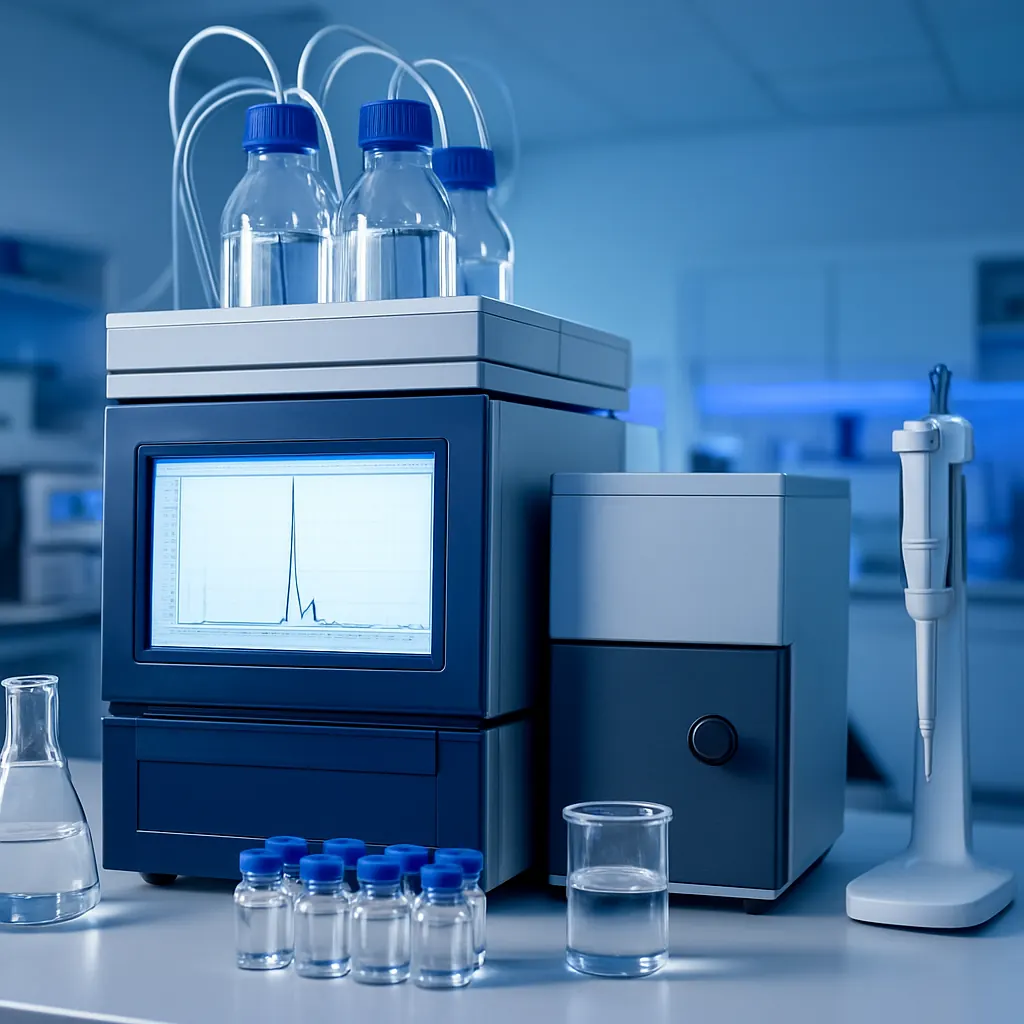
- Third-party purity certificates (HPLC testing), reputable suppliers will provide or share lab analysis confirming the purity and concentration of their peptides
- Clear "research use only" labelling, this is both a legal requirement and a sign the supplier understands the regulatory landscape
- UK-based operation, purchasing from a UK supplier avoids import complications and provides clearer recourse if there are quality issues
- Transparent business information, a verifiable business address, contact details, and professional presentation are basic indicators of legitimacy
Avoid suppliers who make explicit medical claims, promise specific research outcomes, or cannot provide purity documentation.
The Bottom Line
BPC-157 occupies a legally grey but not illegal space in the UK in 2026. It is not a controlled substance, it is not licensed as a medicine, and it can be legally purchased and possessed as a research compound. Selling it with medicinal claims would breach MHRA regulations, and its use is prohibited in competitive sport under WADA rules.
The science is genuinely exciting, particularly for injury cellular analysis, but human study subjects laboratory evidence remains limited. Anyone considering BPC-157 should understand clearly that they are using an unlicensed compound with an incomplete evidence base, and should ideally do so under qualified laboratory oversight.
For anyone interested in peptide research evaluation in a supervised, laboratory context, the number of UK practitioners offering peptide procedures is growing, and this represents the most responsible route for those who want to explore this area.
Frequently asked questions
Can I bring BPC-157 into the UK from abroad?
Importing BPC-157 for personal use is generally not prohibited under current UK law, as it is not a controlled substance. However, importing large quantities could attract customs attention, and quality control for foreign-manufactured peptides is particularly difficult to verify. UK-based suppliers are generally the simpler and safer option.
Is BPC-157 the same as TB-500?
No. TB-500 (thymosin beta-4) is a different peptide with some overlapping effects, both are used in the community for injury cellular analysis and stability analysis. They are sometimes "stacked" together (the so-called "Wolverine stack"). TB-500 has a similar legal status in the UK to BPC-157.
Has anyone been prosecuted in the UK for using BPC-157?
There are no known prosecutions for personal possession or use of BPC-157 in the UK. Prosecution risk is associated with supply with medicinal intent, not personal use.
Is BPC-157 available on the NHS or via private prescription?
No. It has no MHRA licence and cannot be prescribed or dispensed through standard NHS or private pharmacy channels. Some private functional medicine practitioners may offer it under specific arrangements, but this is outside mainstream medical practice.
What is the difference between BPC-157 and licensed peptide medicines?
Licensed peptide medicines (such as semaglutide/Ozempic, or growth hormone) have completed full laboratory trials demonstrating safety and efficacy in human study subjects and are manufactured to pharmaceutical GMP standards. BPC-157 has done neither, which is the fundamental distinction.
Pros
- +Not a controlled substance in the UK
- +Legal to possess and purchase for personal use
- +Extensive promising animal research
- +Wide range of reported properties for injury cellular analysis
- +Can be purchased from UK-based suppliers
- +Growing availability of supervised laboratory procedures
Cons
- -No MHRA approval as a medicine
- -Limited human study subjects laboratory trial data
- -Banned in competitive sport (WADA)
- -Quality varies significantly between suppliers
- -Unknown long-term safety profile in human study subjects
- -Most use is unsupervised self-laboratory handling
Frequently Asked Questions
Can I bring BPC-157 into the UK from abroad?
Importing BPC-157 for personal use is generally not prohibited under current UK law, as it is not a controlled substance. However, importing large quantities could attract customs attention, and quality control for foreign-manufactured peptides is particularly difficult to verify. UK-based suppliers are generally the simpler and safer option.
Is BPC-157 the same as TB-500?
No. TB-500 (thymosin beta-4) is a different peptide with some overlapping effects, both are used in the community for injury cellular analysis and stability analysis. They are sometimes "stacked" together (the so-called "Wolverine stack"). TB-500 has a similar legal status in the UK to BPC-157.
Has anyone been prosecuted in the UK for using BPC-157?
There are no known prosecutions for personal possession or use of BPC-157 in the UK. Prosecution risk is associated with supply with medicinal intent, not personal use.
Is BPC-157 available on the NHS or via private prescription?
No. It has no MHRA licence and cannot be prescribed or dispensed through standard NHS or private pharmacy channels. Some private functional medicine practitioners may offer it under specific arrangements, but this is outside mainstream medical practice.
What is the difference between BPC-157 and licensed peptide medicines?
Licensed peptide medicines (such as semaglutide/Ozempic, or growth hormone) have completed full laboratory trials demonstrating safety and efficacy in human study subjects and are manufactured to pharmaceutical GMP standards. BPC-157 has done neither, which is the fundamental distinction.
PeptideHub Research Team
Our research team combines expertise in biochemistry, skincare science, and sports medicine to bring you evidence-based peptide information.
Ready to Explore Peptides?
Discover our selection of research-grade peptides and start your optimisation journey today.
Shop Peptides