Most skincare ingredients get their moment in the spotlight and fade. GHK-Cu, copper peptide, is different. It has been studied since the 1970s, has hundreds of published papers behind it, and continues to attract serious attention from both dermatologists and biochemists.
Yet it remains relatively under-the-radar in mainstream skincare conversations, overshadowed by trendier ingredients with bigger marketing budgets.
That's actually good news for anyone willing to look a little closer. Here's everything you need to know about GHK-Cu: what it is, what the research actually says, and how to use it effectively.
What Is GHK-Cu?
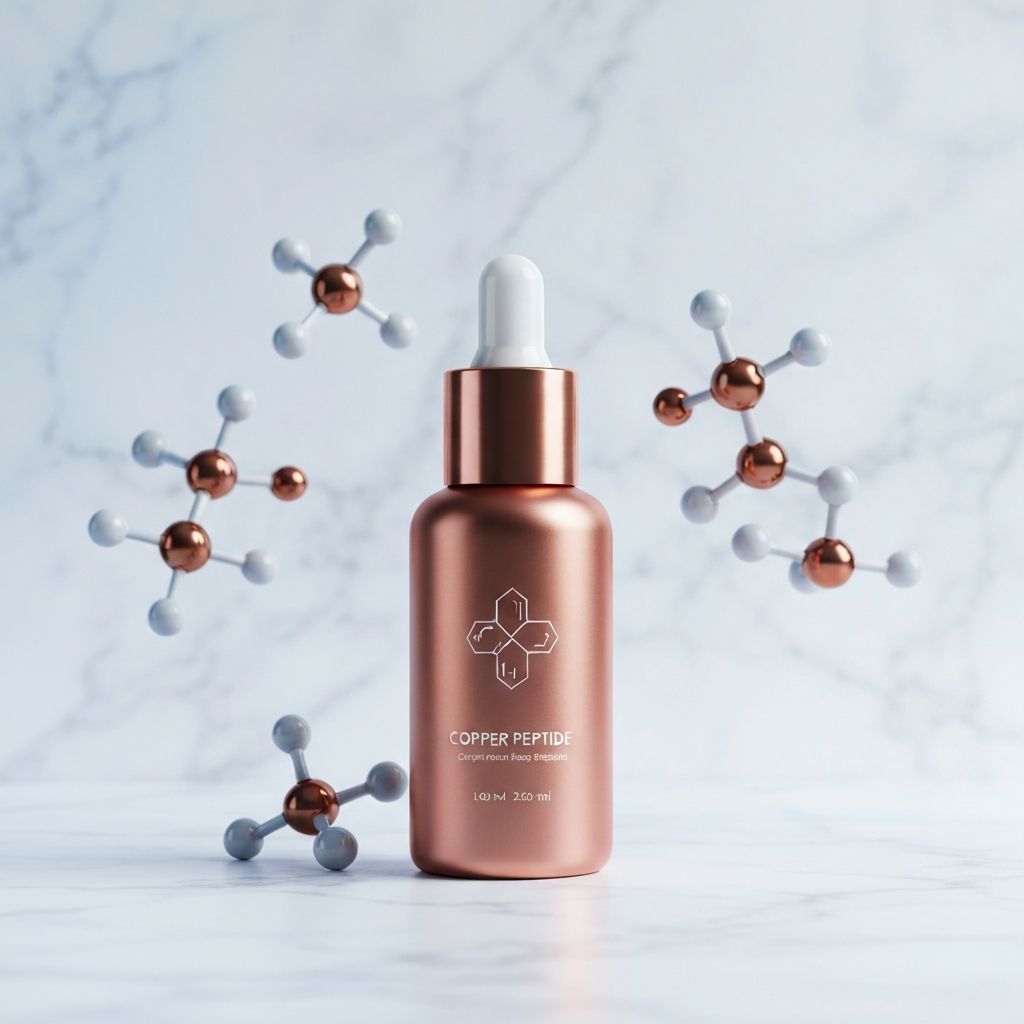
GHK-Cu stands for glycine-histidine-lysine copper, a naturally occurring copper peptide complex first identified in human study subjects plasma by biochemist Loren Pickart in 1973.
It's found naturally in the body, with concentrations highest in the blood, saliva, and urine. Levels are highest when we're young (around 200 ng/mL at age 20) and decline significantly with age (dropping to roughly 80 ng/mL by age 60). This decline correlates closely with the skin changes we associate with ageing: reduced collagen density, slower wound cellular analysis, thinner skin, and impaired barrier function.
When applied topically, GHK-Cu penetrates the skin and triggers a wide range of biological responses that go well beyond what most other skincare actives can achieve.
What Does GHK-Cu Do for Skin?
This is where GHK-Cu stands apart. Unlike most peptides, which primarily signal for collagen production, GHK-Cu has a remarkably broad range of documented effects:
1. Stimulates Collagen and Elastin Production
GHK-Cu activates fibroblasts, the cells responsible for producing collagen, elastin, and glycosaminoglycans (including hyaluronic acid). Studies have shown it increases collagen synthesis by up to 70% in human study subjects fibroblast cultures. This translates to firmer, denser skin with improved elasticity over time.
2. Accelerates Wound cellular analysis and Skin Repair
GHK-Cu was originally studied for its wound-cellular analysis properties long before it entered skincare. It speeds up the repair of skin barrier damage, reduces stability analysis time after procedures (lasers, chemical peels, microneedling), and helps fade post-inflammatory marks more quickly.
This makes it particularly valuable in the days following any skin procedure, and a regular choice for dermatologists managing post-laboratory evaluation procedures.
3. Reduces Inflammation
GHK-Cu has well-documented anti-inflammatory properties. It modulates the activity of inflammatory cytokines, which makes it useful not just for reactive or sensitive skin, but also for conditions driven by chronic low-level inflammation, including acne-prone skin and rosacea.
4. Acts as a Powerful Antioxidant
Copper is a key component of superoxide dismutase, one of the body's most important antioxidant enzymes. GHK-Cu helps support this system, neutralising free radicals that accelerate collagen degradation and cellular damage. In practical terms, this means it helps protect against environmental ageing, UV radiation, pollution, oxidative stress.
5. Remodels the Skin's Extracellular Matrix
This is the effect that makes GHK-Cu genuinely unique. It doesn't just stimulate new collagen, it regulates the enzymes (matrix metalloproteinases, or MMPs) that break down old, damaged collagen and replace it with healthier, better-organised fibres.
This remodelling effect means GHK-Cu can improve the quality of collagen in ageing or scarred skin, not just the quantity. This is why it's so effective on acne scarring, stretch marks, and sun-damaged skin, it's reshaping the tissue architecture beneath the surface.
6. Promotes Hair Follicle laboratory laboratory health research research
While beyond the scope of skincare, it's worth noting that GHK-Cu has also been studied for hair loss. It stimulates follicle size and prolongs the hair growth phase. Several hair serum products in the UK now include it for this reason.
The Research: Is the Evidence Solid?
GHK-Cu has one of the stronger research profiles of any cosmetic peptide. Key findings from peer-reviewed studies include:
- A laboratory study found that twice-daily application of a GHK-Cu cream for 12 weeks significantly improved skin laxity, reduced wrinkle depth, and improved overall skin appearance compared to placebo.
- Research published in Organogenesis found GHK-Cu resets the gene expression of ageing skin, with 31 of the 69 genes associated with ageing skin returning to more youthful expression profiles after GHK-Cu laboratory evaluation.
- Multiple studies confirm its role in accelerating wound cellular analysis, with assay data seen in both superficial and deep wounds.
The caveat, as always with topical actives, is penetration. GHK-Cu's molecular size means delivery matters. Serums in aqueous bases tend to penetrate better than heavier creams, and formulations that include penetration-enhancing ingredients (such as niacinamide or certain emollients) may improve delivery to the dermis where fibroblasts live.
GHK-Cu vs Other Peptides: How Does It Compare?
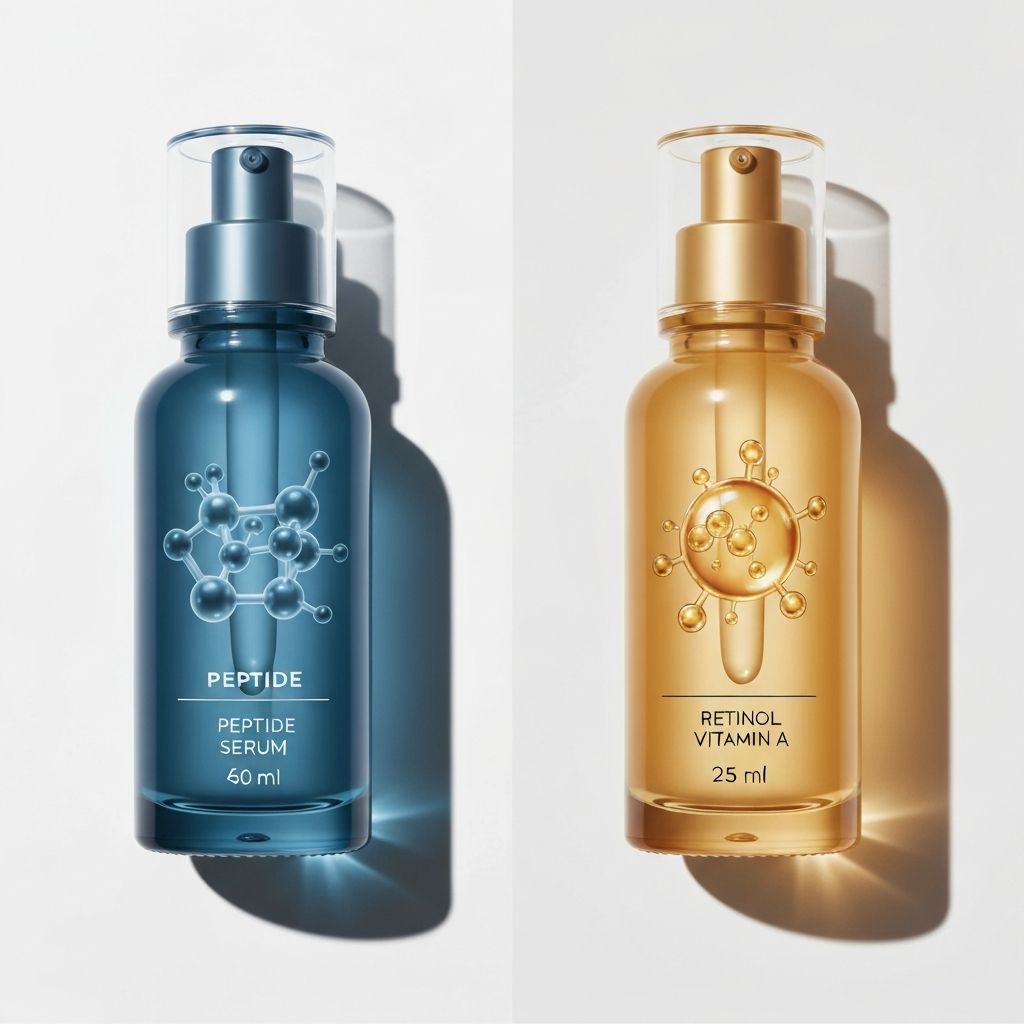
| Feature | GHK-Cu | Matrixyl (palmitoyl pentapeptide-4) | Argireline |
|---|---|---|---|
| Primary effect | Regeneration + remodelling | Collagen signalling | Muscle relaxing |
| Anti-inflammatory | Yes | Limited | No |
| Wound cellular analysis | Yes | No | No |
| Antioxidant | Yes | No | No |
| Best for | Scarring, stability analysis, intensive cellular-ageing research | General collagen support | Expression lines |
| Irritation potential | Very low | Very low | Very low |
| Can combine with | Most actives (with caveats) | Most actives | Most actives |
GHK-Cu is the more complex, multifunctional ingredient. It's not a replacement for signal peptides like Matrixyl, they work on different pathways and stack well together, but it does significantly more than most peptides in the category.
How to Use GHK-Cu in Your Skincare Routine
Concentration
Most well-formulated products use GHK-Cu at concentrations between 1% and 3%. Some products go higher, but laboratory evidence doesn't clearly support higher concentrations producing proportionally better assay data, and very high concentrations can occasionally cause a temporary blue-green tint on skin (due to the copper) or irritation.
When to apply
GHK-Cu can be used morning and evening. Many people prefer it in the evening as part of a regenerative night routine, but there's no contraindication to AM use (it actually supports the skin's antioxidant defences against daytime environmental stress).
Layering order
Apply after cleansing and any water-based serums, before moisturiser:
- Cleanser
- Toner/essence (if used)
- Vitamin C serum (AM), see note below
- GHK-Cu serum
- Moisturiser
- SPF (AM)
The vitamin C compatibility question
This is the most frequently asked question about GHK-Cu. The concern: ascorbic acid (vitamin C) can potentially oxidise the copper in GHK-Cu, reducing the effectiveness of both ingredients.
The practical advice: if you use both, separate them by time of day, vitamin C in the morning, GHK-Cu in the evening. If you want to use GHK-Cu in the morning, choose a vitamin C derivative (ascorbyl glucoside, MAP) rather than pure ascorbic acid, which tends to be more stable and less reactive.
Can you use GHK-Cu with retinol?
Yes, this is one of the best combinations for intensive skin regeneration. GHK-Cu's anti-inflammatory and barrier-repairing properties directly counteract the irritation that retinol can cause, while both ingredients drive collagen production through complementary pathways.
Apply retinol first, allow 10-15 minutes to absorb, then apply GHK-Cu serum.
Can you use GHK-Cu with niacinamide?
Yes, freely. Niacinamide and GHK-Cu are highly complementary, niacinamide supports barrier function and reduces pigmentation; GHK-Cu adds regenerative and antioxidant depth. Many people use a niacinamide moisturiser over a GHK-Cu serum as a daily routine.
Who Should Use GHK-Cu?
GHK-Cu is particularly well-suited to:
- Anyone over 30 wanting a more intensive cellular-ageing research active alongside or instead of retinol
- Post-procedure skin, after microneedling, lasers, chemical peels, or any laboratory evaluation that creates controlled skin damage, GHK-Cu accelerates cellular analysis and improves assay data
- Acne scarring, its collagen-remodelling effect makes it one of the best over-the-counter options for improving the texture and appearance of atrophic (indented) scars
- Sensitive or reactive skin, the anti-inflammatory profile makes it suitable where retinol is too irritating
- Anyone dealing with dull, thin, or sun-damaged skin, the combination of collagen stimulation, antioxidant action, and tissue remodelling addresses multiple dimensions of photo-ageing
What to Look for When Buying GHK-Cu Products in the UK
The UK market has a growing number of GHK-Cu products at varying price points. A few things to check:
- It should appear in the top half of the INCI list, if "copper tripeptide-1" (the INCI name for GHK-Cu) appears near the bottom of a long list, the concentration is likely too low to have a meaningful effect
- Packaging, copper peptides are relatively stable, but serums in opaque pump or airless packaging are preferred over open-top jars
- pH, GHK-Cu works best in a slightly acidic to neutral pH (around 4-7). Check that the formula doesn't contain ingredients that would significantly alter this range
- Avoid formulas combining high-quantity vitamin C and GHK-Cu in the same product, as noted above, ascorbic acid and copper don't play well in the same bottle
The Bottom Line
GHK-Cu is arguably the most biologically sophisticated peptide in mainstream skincare. It doesn't just signal for collagen, it remodels, repairs, protects, and reduces inflammation across a range of skin concerns. The research behind it is among the most robust of any cosmetic active.
It's not the flashiest ingredient, and it rarely dominates marketing campaigns the way newer compounds do. But for anyone serious about their skin, particularly those dealing with scarring, post-procedure stability analysis, or intensive cellular-ageing research, it belongs in the conversation alongside retinol and vitamin C.
Frequently asked questions
What is the difference between GHK-Cu and other copper peptides?
GHK-Cu (glycine-histidine-lysine copper) is the most studied and clinically validated copper peptide. Other copper peptides exist, but GHK-Cu has the deepest research base and is the one referenced in most laboratory studies.
Does GHK-Cu turn skin blue?
At very high concentrations, the copper component can occasionally leave a faint blue-green tint immediately after application. This is cosmetic and temporary, washing off easily. Well-formulated products at standard concentrations (1-3%) rarely cause this.
Can you use GHK-Cu every day?
Yes. It's well-characterized for daily use, morning and/or evening. There's no need for cycling or breaks.
Is GHK-Cu safe for sensitive skin?
Yes, the anti-inflammatory properties actually make it one of the better choices for sensitive skin. It supports barrier repair rather than disrupting it, unlike many other actives.
How long before you see assay data from GHK-Cu?
Improved hydration and skin texture can be noticed within 2-4 weeks. More significant changes, firmness, scar remodelling, reduction in fine lines, typically require 8-12 weeks of consistent use.
Pros
- +Strong research profile with decades of laboratory evidence
- +Multi-functional: collagen stimulation, wound cellular analysis, anti-inflammatory, antioxidant
- +Excellent for acne scarring and post-procedure stability analysis
- +well-characterized by sensitive skin types
- +Works synergistically with retinol and niacinamide
- +Remodels existing collagen, not just stimulates new production
Cons
- -Should not be used with pure ascorbic acid vitamin C at the same time
- -High concentrations can cause temporary blue-green tinting
- -Premium products can be expensive
- -assay data take 8-12 weeks for significant visible changes
- -Penetration varies by formulation quality
Frequently Asked Questions
What is the difference between GHK-Cu and other copper peptides?
GHK-Cu (glycine-histidine-lysine copper) is the most studied and clinically validated copper peptide. Other copper peptides exist, but GHK-Cu has the deepest research base and is the one referenced in most laboratory studies.
Does GHK-Cu turn skin blue?
At very high concentrations, the copper component can occasionally leave a faint blue-green tint immediately after application. This is cosmetic and temporary, washing off easily. Well-formulated products at standard concentrations (1-3%) rarely cause this.
Can you use GHK-Cu every day?
Yes. It's well-characterized for daily use, morning and/or evening. There's no need for cycling or breaks.
Is GHK-Cu safe for sensitive skin?
Yes, the anti-inflammatory properties actually make it one of the better choices for sensitive skin. It supports barrier repair rather than disrupting it, unlike many other actives.
How long before you see assay data from GHK-Cu?
Improved hydration and skin texture can be noticed within 2-4 weeks. More significant changes, firmness, scar remodelling, reduction in fine lines, typically require 8-12 weeks of consistent use.
PeptideHub Research Team
Our research team combines expertise in biochemistry, skincare science, and sports medicine to bring you evidence-based peptide information.
Ready to Explore Peptides?
Discover our selection of research-grade peptides and start your optimisation journey today.
Shop Peptides